
East Village: Bars, History and the Coolest Streets
East Village: Bars, History and the Coolest Streets
Guía rápida
- Bohemian life in the East Village
- Andy Warhol in the East Village
- The Church of Rock and Roll
- Walking through rock history
- Bars in the East Village
- Museums in the East Village
- The HOWL! Festival
- East Village sub-neighborhoods
- Alphabet City
- The Bowery
- History of the neighborhood
- Celebrities in the East Village
- Address
- 10 Tips to Save on Your Trips
- 👇🏼 Leave your email and be part of something special.
- Deals for your getaway
- 15% off your hotel
Jack Kerouac, Allen Ginsberg, and William Burroughs, among other writers, turned the East Village and the Lower East Side into a touchstone of sixties counterculture and an incubator for movements like punk rock and pop art.
This is a New York neighborhood you have to visit if you're into that decade, when Manhattan was the epicenter of it all. See Manhattan.
Bohemian life in the East Village
In the seventies this neighborhood became famous for its nightlife, and plenty of experiments in art, music, and film happened here. Take these examples:
Andy Warhol in the East Village
In 1966 Andy Warhol staged some of his multimedia events in the East Village, like The Exploding Plastic Inevitable, which featured performances by the Velvet Underground and Nico in a Polish social hall on St. Mark's Place.
St. Mark's Place is still one of the neighborhood's nerve centers. You'll find it on E 8th Street, between Lafayette Street and Avenue A.
If you're interested in the history of New York, here's a fun fact: St. Mark's Church (131 E 10th Street at Second Avenue), which dates back to 1799, holds the remains of Peter Stuyvesant, one of the founders of New Amsterdam. Remember that before the English, New York was a Dutch colony? 😉
The Church of Rock and Roll
The Fillmore East (Second Avenue at East 6th Street), a venue that operated between 1968 and 1971, came to be known as «the Church of Rock and Roll.»
Major bands played here, including The Who, Pink Floyd, The Jimi Hendrix Experience, Cream, and Led Zeppelin.
Another important musical landmark is CBGB, but I cover that legendary club on the Lower East Side page.
Walking through rock history
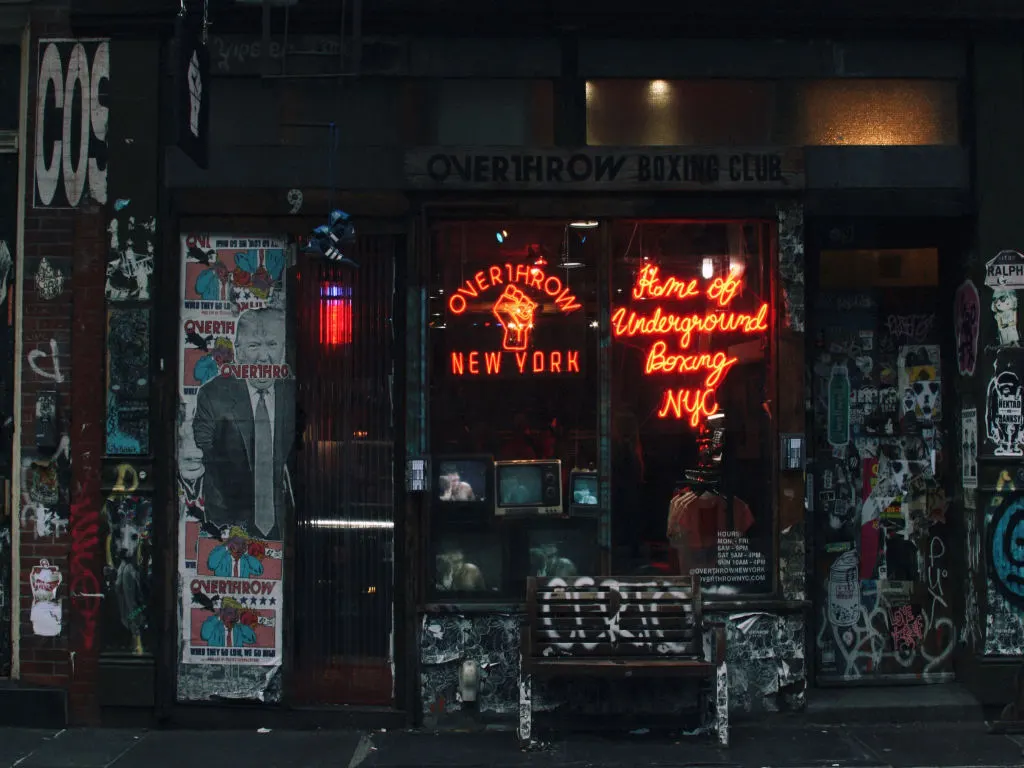
Some of these bars and venues that shaped rock history are still standing, and others are long gone. Even so, the stories from those beat, rock, and punk decades live on.
On the streets of the East Village you'll be retracing the steps of the Ramones, Blondie, the Doors, Talking Heads, and Lou Reed, among other regulars in this avant-garde New York neighborhood.
Until 2019 you could still soak up the atmosphere of the New York rock-punk scene at Manitoba's Bar (99 Avenue B, between 6th and 7th Streets), owned by singer Richard «Handsome Dick» Manitoba, frontman of The Dictators.
At the link you can read Dick's heartfelt message about the closing of Manitoba's, one of the last punk bars left standing.
Bars in the East Village
Nightlife in the Village is famous, especially on the Bowery. But here I want to point you to a bar that has been open since 1854! I'm talking about McSorley's Old Ale House (15 East 7th Street).
You can read up on its history over the years. Among the highlights: it was the first bar in New York to allow women inside, in 1969.
The decor keeps that late-nineteenth-century aura, and the place comes with plenty of legends, including the claim that even Abraham Lincoln drank here.
Museums in the East Village
As anywhere in New York, you'll always find traces of the past. Several of the tenements, those distinctive buildings that housed the working-class families arriving from Europe in the nineteenth and early twentieth centuries, are still standing.
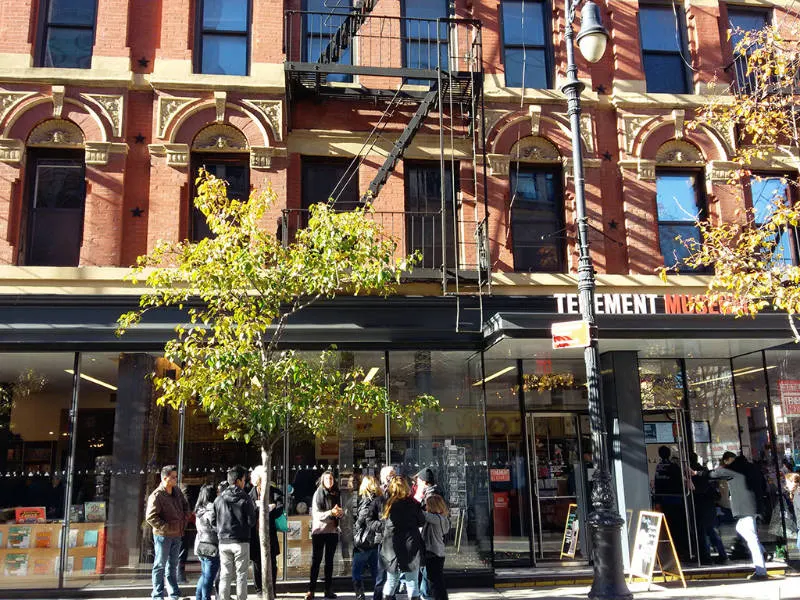
If that history appeals to you, you can visit the Ukrainian Museum to get a sense of life back then, but I especially recommend taking one of the tours at the Tenement Museum, an institution devoted to showing how the immigrants who landed in the Lower East Side actually lived (decades ago the East Village was considered part of the LES).
The HOWL! Festival
It's a good idea to visit the East Village during HOWL! in Tompkins Square Park, a festival named in honor of Allen Ginsberg's poem.
During the festival the neighborhood fills up with poetry, music, dance, and free concerts, channeling the rebellious spirit of the sixties.
Sometimes it's in June, other times in August or September. Very chaotic, true to beat generation style, so it's best to check their website if you're interested.
East Village sub-neighborhoods
The East Village also has a couple of small sub-neighborhoods with identities of their own: Alphabet City and The Bowery.
Alphabet City
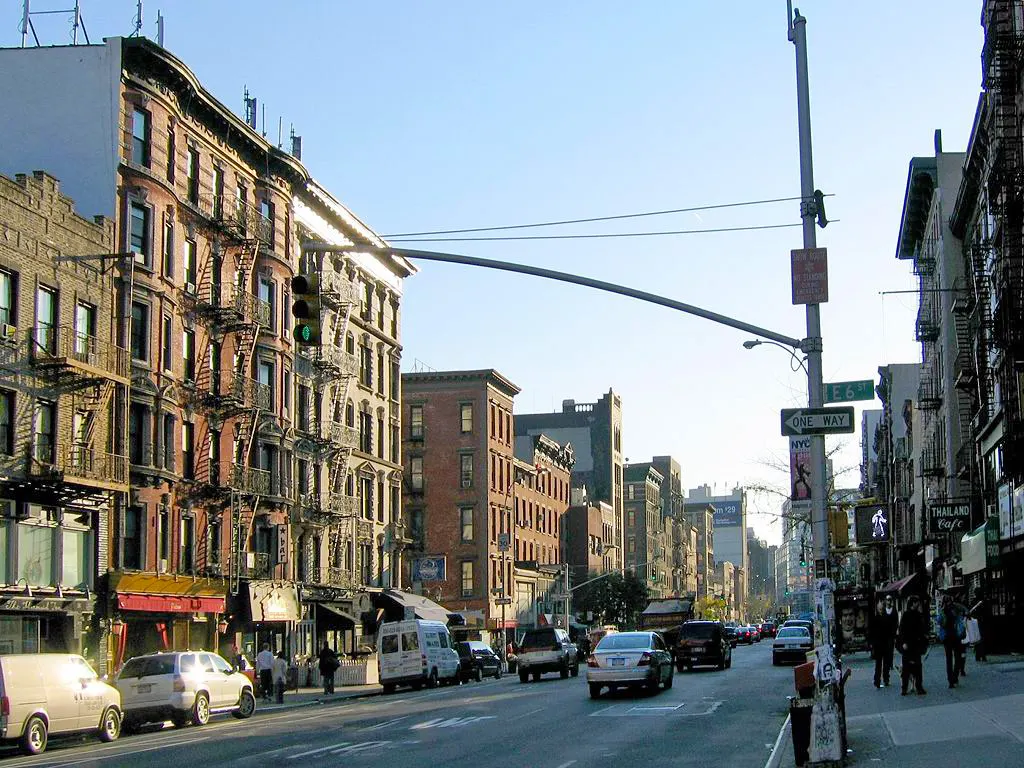
It's called that because of Avenues A, B, C, and D, the only ones in Manhattan whose names are just letters. It sits between Houston Street to the south and 14th Street to the north.
Alphabet City covers roughly two thirds of the neighborhood, and not so long ago it was the archetype of the dangerous New York block, overrun by the drug trade.
There are a few things to see here, like the Nuyorican Poets Cafe and Tompkins Square Park (East 10th Street), the East Village's green lung, which in the sixties was a hub of protests and famous riots.

The Bowery
Another distinctive part of the East Village is The Bowery, which some people consider part of the Lower East Side and others part of the East Village.
This is where the legendary club CBGB stood until 2006, along with important bars and stages for live bands.
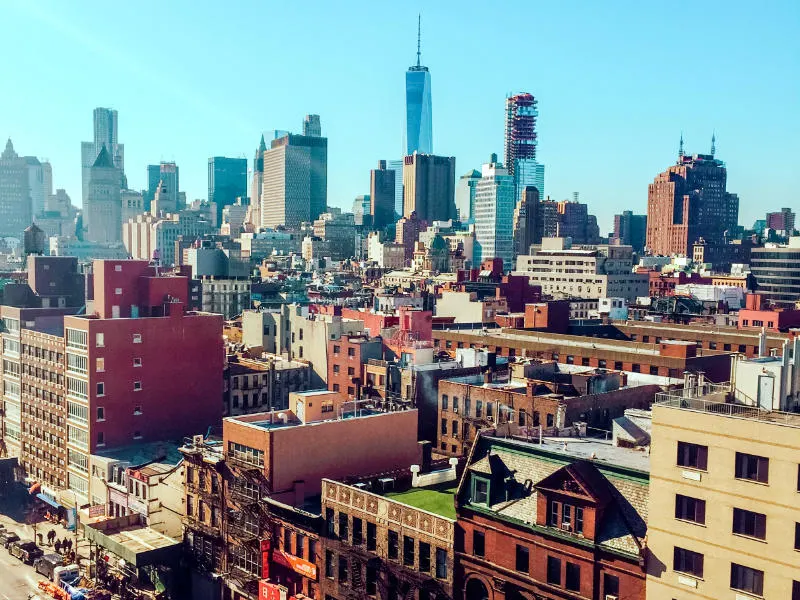
The truth is that this area, once full of rockers and drifters (the Bowery also had many homeless shelters), has been filling up with luxury condos for some years now.
History of the neighborhood
A few decades ago the East Village was considered part of the Lower East Side, but in the sixties it broke away with the mass arrival of artists, musicians, students, and hippies drawn by the New York beat generation.
With these new residents arriving, real estate developers and shop owners saw a chance to set the neighborhood apart from the Lower East Side, a poor and dangerous area at the time. That's how the idea of the East Village came about, borrowing the reputation of Greenwich Village.
But the East Village's disruptive past has given way to the general gentrification of Manhattan, which, as you'll see, worked its magic here too, first an immigrant area and later an edgy one. Plenty of people think that avant-garde spirit moved out of Manhattan long ago to neighborhoods like Williamsburg in Brooklyn.
Celebrities in the East Village
I'll close this page about a fascinating neighborhood with a short list of famous people who lived or still live in the East Village, just to make it clear that the East Village will keep germinating culture for many decades to come:
- Filmmaker Darren Aronofsky
- Musicians Madonna, Iggy Pop, Regina Spektor, and Lou Reed
- Actors and actresses like Daniel Radcliffe, Chloë Sevigny, and Rachel Weisz, among many others.
Address
The East Village sits between the Bowery and the East River, and between 14th and Houston Streets
How to get there
Subway Line F. 2 Av station
Subway Line L. 1 Av and 3 Av stations
Map
[mappress mapid=»231″]