
Greenwich Village: What to See on Its Loveliest Streets
Greenwich Village: What to See on Its Loveliest Streets
Guía rápida
- What to See in Greenwich Village
- 1. Washington Square Park
- 2. Christopher Park
- 3. Christopher Street Shops
- 4. Washington Mews
- 5. The Triangle Shirtwaist Factory Fire
- 6. Hudson River Park
- 7. Christopher Street Pier
- 8. Halloween Parade
- 9. Theater in Greenwich Village
- Greenwich Village: a tolerant, activist neighborhood
- Edward Hopper's neighborhood
- History of Greenwich Village
- Celebrities in the Village
- The Friends apartment in Greenwich Village
- Address
- How to get to Greenwich Village
- 10 Tips to Save on Your Trips
- 👇🏼 Leave your email and be part of something special.
- Deals for your getaway
- 15% off your hotel
Greenwich Village is a Manhattan neighborhood packed with cafes, restaurants, and offbeat shops along its narrow, charming streets. New Yorkers simply call it «The Village.»
Like its neighbors East Village and West Village, back in the fifties it was one of the New York neighborhoods frequented by the East Coast Beat Generation, and it was also central to the gay liberation movement.
If you're into American painting, you'll love knowing that Greenwich Village is Edward Hopper's home neighborhood, and you'll spot dozens of references to his paintings on its streets.
What to See in Greenwich Village
There's plenty to see in Greenwich Village, since it's also the heart of the New York University campus, home to the Washington Square arch and Washington Mews, one of the best preserved old streets in Manhattan. It's a must.
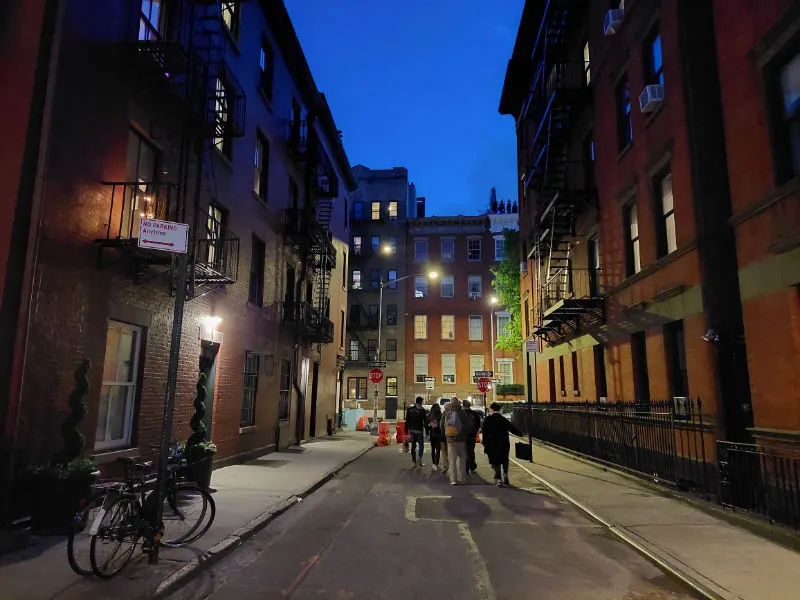
And of course there's no shortage of culture and nightlife in the Village: theaters, street music, a history of civil rights struggles, shops of every kind selling exotic goods, detective supplies, pet clothing, even BDSM gear. Getting lost in these streets is a blast.
1. Washington Square Park
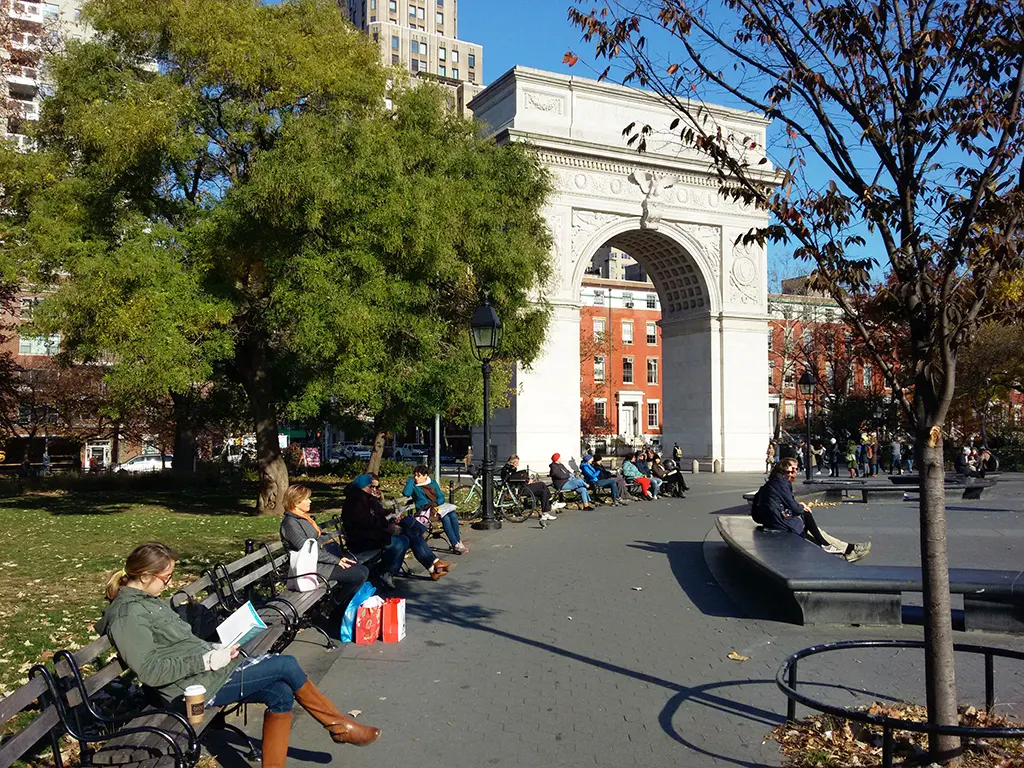
For many people the heart of the Village is Washington Square, a buzzing plaza that the NYU campus is built around.
Its students keep the rebellious, youthful spirit of the sixties Village alive, holding off the neighborhood's complete gentrification.
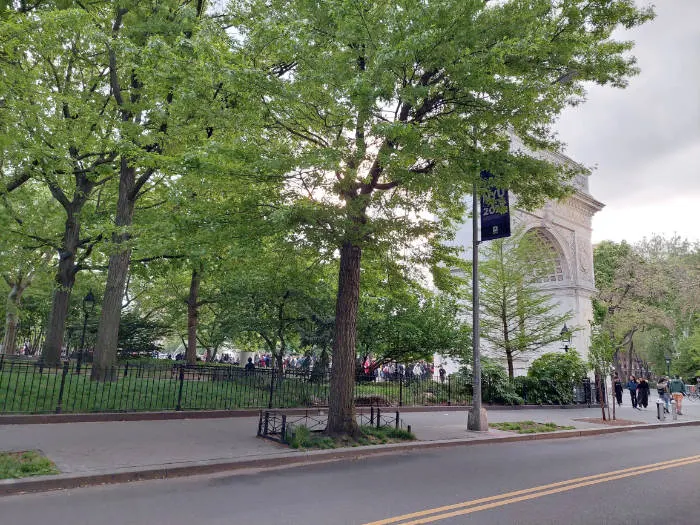
Did you know it's one of the most haunted spots in New York? At least that's what the locals say.
They may have a point. Around 20,000 victims of the yellow fever epidemic that devastated 19th-century New York still lie beneath the square. It was also a site of public executions in colonial times.
2. Christopher Park
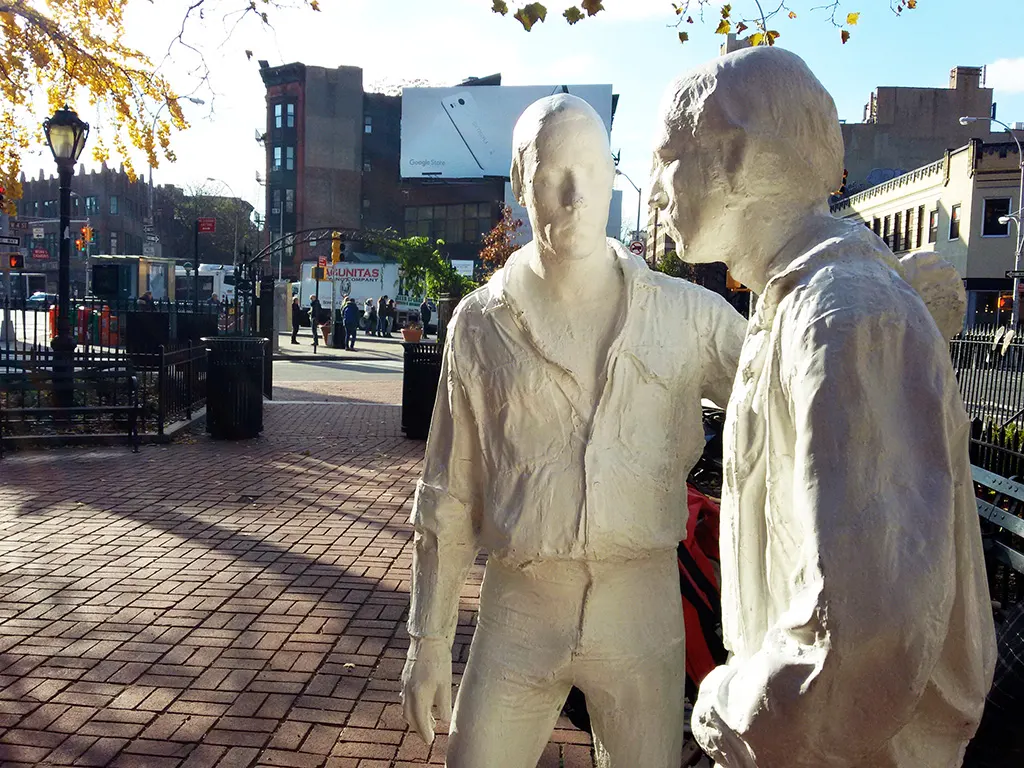
More a small plaza than a park, it sits between 51 and 53 Christopher Street (technically it's in the West Village, but the Village's borders are really just names).
It may be small, but its meaning is huge: right across the street is the Stonewall Inn, the bar where the 1969 protests that launched the gay liberation movement began.
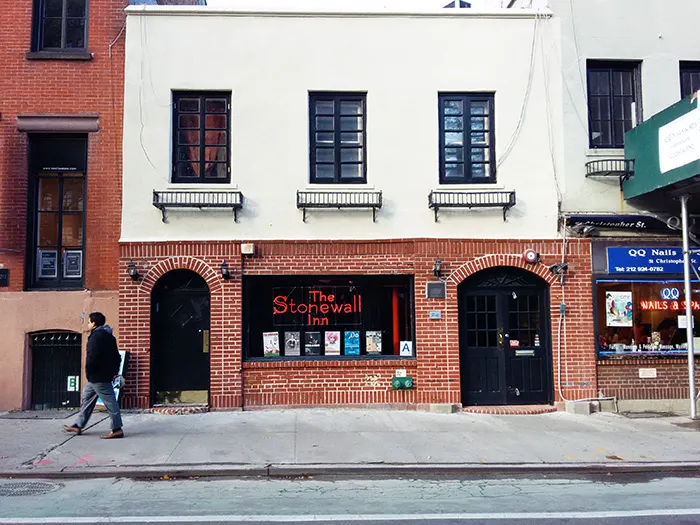
In Christopher Park you'll find George Segal's famous white plaster statues, created as a tribute to the fight for LGBT rights.
They're two same-sex couples chatting easily and freely, like any other. Photos next to Segal's sculptures in Greenwich Village are a classic, so don't leave without yours 🙂
3. Christopher Street Shops
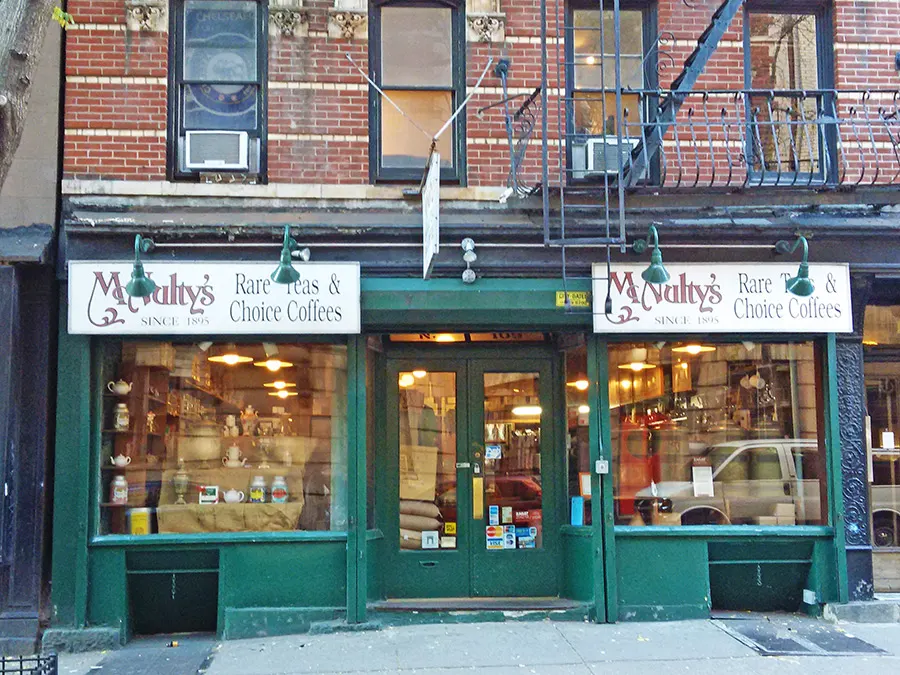
A good move after visiting Christopher Park is to walk down Christopher Street, where you'll run into an impressive range of businesses: century-old tea importers, sex shops for every taste, pet stores, and even a shop selling detective gear. Way too much fun.
4. Washington Mews
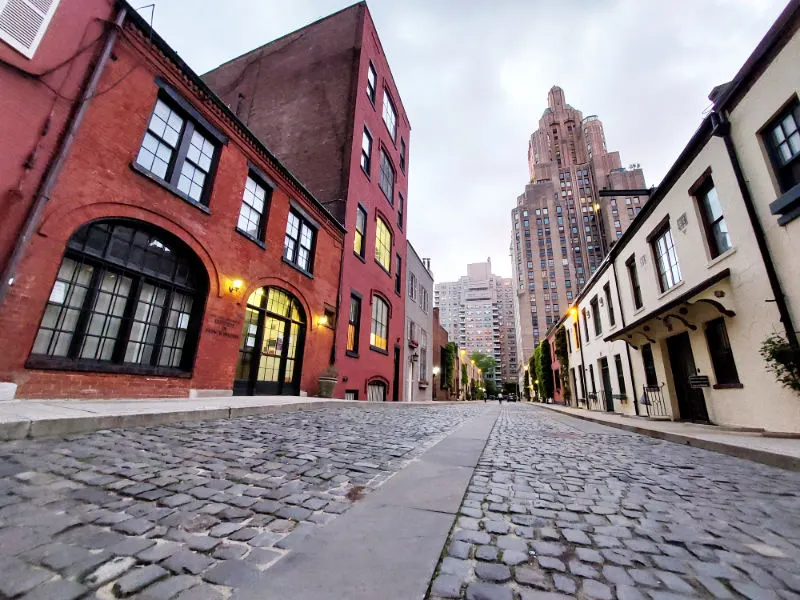
Just steps from Washington Square are the Washington Mews, a bubble of time amid all the modernity.
«Mews» is a British word for noisy, foul-smelling streets lined with stables.
And stables are exactly what filled this cobblestone street in Manhattan well into the 19th century. Washington Mews held the stables for the mansions on the north side of Washington Square.
Today it's a well-kept private street housing New York University offices. During the day the gates to Washington Mews are open and everyone is welcome.
So go ahead and walk through this lovely street that still has its historic cobblestones in one of the most modern cities in the world. Quite a feat.
5. The Triangle Shirtwaist Factory Fire
It's not a cheerful place or a cheerful story, the tragedy that happened at this garment factory in Greenwich Village on March 25, 1911, but it played a key role, at a terrible cost, in advancing workplace safety laws and the recognition of women's rights.
That day a fire consumed the Triangle Waist shirt factory in half an hour. It occupied the eighth, ninth, and tenth floors of the Asch Building (corner of Greene Street and Washington Place, east of Washington Square Park).
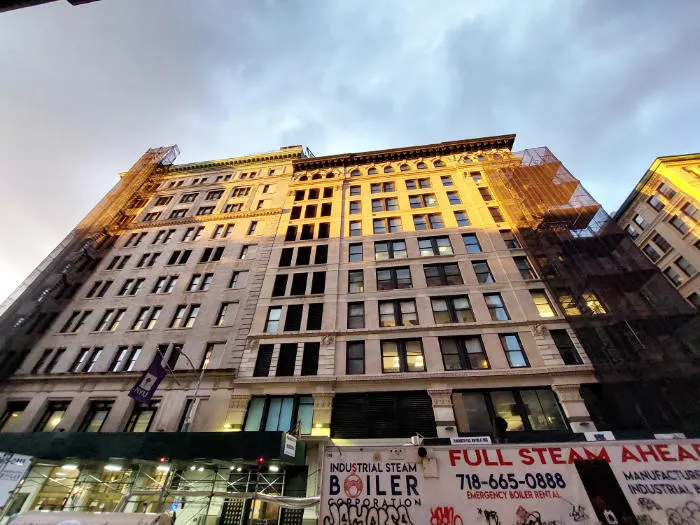
Firefighters did arrive, but their ladders were too short, the hoses didn't have enough pressure to reach the top floors, and the factory doors were locked, according to the owners, to prevent workers from stealing merchandise.
Unable to escape the burning building, dozens of workers jumped from the windows in a desperate attempt to save themselves.
The final toll was 146 dead, including 123 young immigrant women from Eastern Europe. It remains the deadliest industrial disaster in New York's history.
There are competing theories about how the fire started: a poorly extinguished cigarette butt, a spark from a sewing machine, even arson to collect insurance money.
Today the building is called the Brown Building and belongs to New York University.
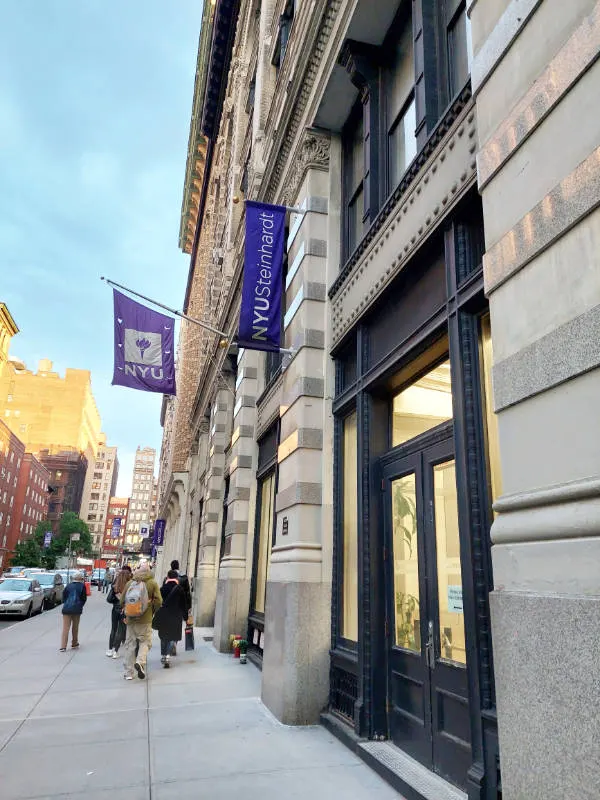
During a ghost tour of Greenwich Village, our guide told us that students and university staff report smelling smoke with no identifiable source, while others say they feel an inexplicable anxiety that only lifts once they leave the building (you can read a university article about the building).
6. Hudson River Park
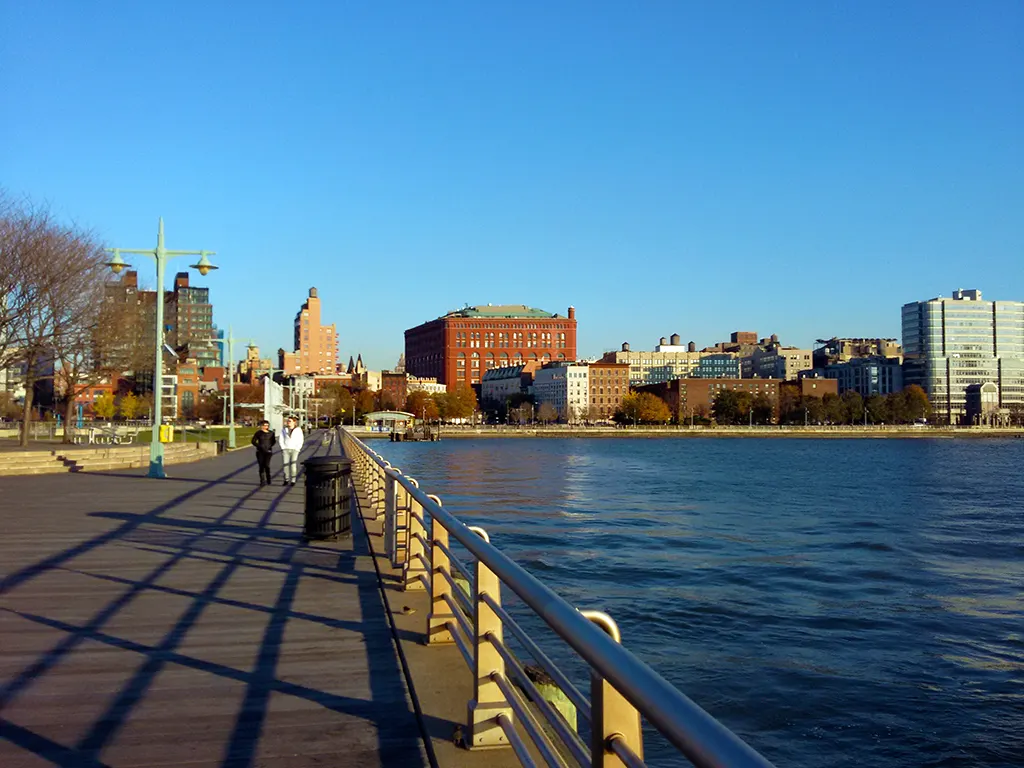
If you keep walking to the end of Christopher Street you'll hit Hudson River Park, the second largest park in New York.
The park runs along the Hudson River waterfront and cuts through several neighborhoods besides Greenwich Village: Tribeca, the Meatpacking District, Chelsea, and Midtown West.
If you like to walk, head north and you can visit the High Line and Little Island, a floating park over the Hudson River that opened in 2021.
This park is always adding new attractions, like Gansevoort Peninsula, Manhattan's new beach right across from the Whitney Museum. You can sunbathe on white sand with a view of the World Trade Center.
Walk south and you'll reach the WTC and Battery Park, with One World Trade Center in the background the whole way.
7. Christopher Street Pier
It's part of Hudson River Park, but Christopher Street Pier deserves its own mention: an immaculately maintained green space on Manhattan's West Side.
Until the 1980s the pier was a derelict, abandoned spot, popular as a gathering place for the LGBTQ community during the very difficult years of the AIDS crisis.
Over time, Greenwich Village became one of the most expensive neighborhoods in the United States, and the pier's value rose along with it.
It's still a meaningful gathering place for the LGBTQ community, but now it's a spot to unwind, with sweeping views of the New York skyline.
8. Halloween Parade
If you're in the city on October 31, head to the neighborhood for the annual Halloween parade (New York's Village Halloween Parade), one of the signature events of October in New York.
This is one of the biggest public parties in New York. Some years have seen 60,000 people marching and twice that many watching.
It's a lot of fun to be in the city that day. Kids and adults take their costumes very seriously, and you'll see Batmans and Jokers, Ghostbusters and Beetlejuices everywhere you look.
9. Theater in Greenwich Village
Plenty of Off-Off-Broadway venues set up in the Village in the late 1950s, usually in bars, coffee shops and jazz clubs, as a reaction against commercial theater. They took aim not only at Broadway shows but at Off Broadway too, which was supposed to be the alternative circuit.
Greenwich Village: a tolerant, activist neighborhood
This is where the gay liberation movement took its first steps, starting with the violent Stonewall protests, known as the first time the country's gay community openly pushed back against institutional repression and persecution.
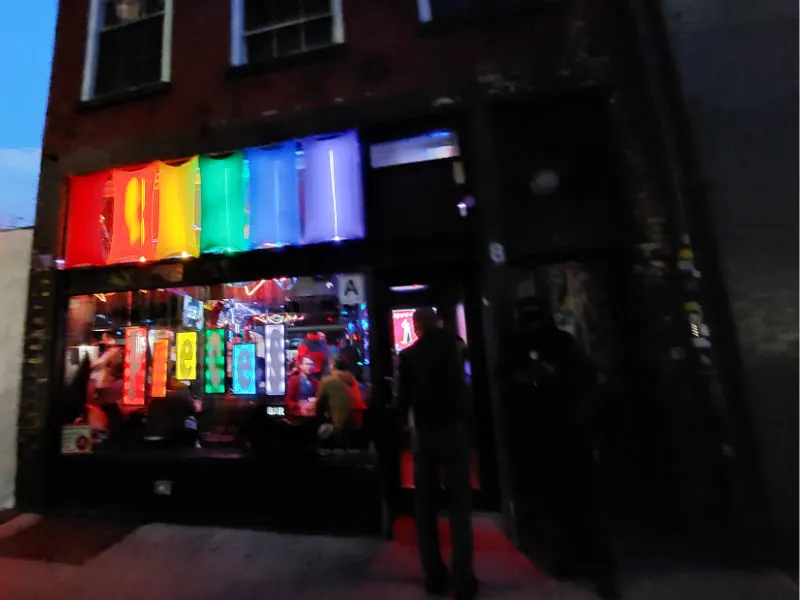
Ever since, the neighborhood has been defined by its tolerance and activism. That's why in popular culture «the Village» is often associated with the LGBTQ community, and it's full of bars that welcome everyone.
LGBT Community Center
It remains an important stronghold in the fight for gay rights. The LGBT Community Center is still going, and from 1967 to 2009 Christopher Street was home to the Oscar Wilde bookshop, the world's first store specializing in literature by gay and lesbian authors.
Pride March
The truth is that much of this community has moved to other neighborhoods like Chelsea and the East Village. Even so, it's still a major place of pilgrimage, especially every last weekend of June, when the Lesbian, Gay, Bisexual and Transgender Pride March takes place.
Edward Hopper's neighborhood
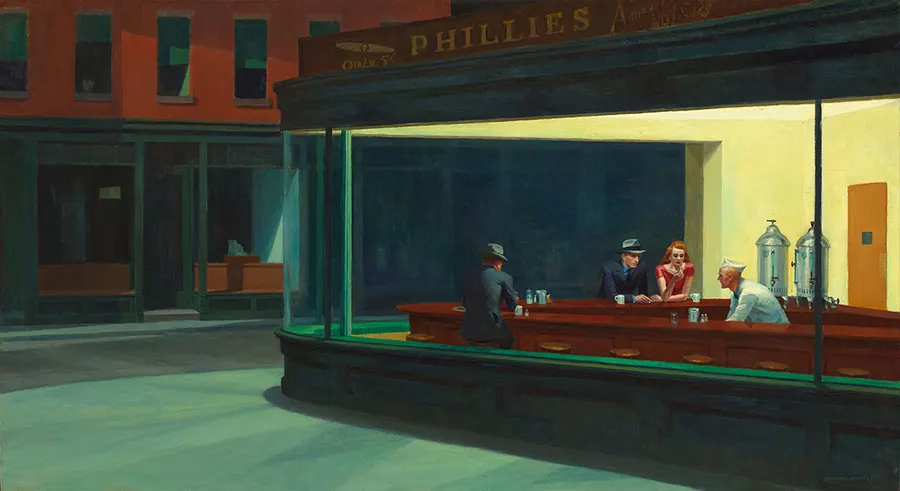
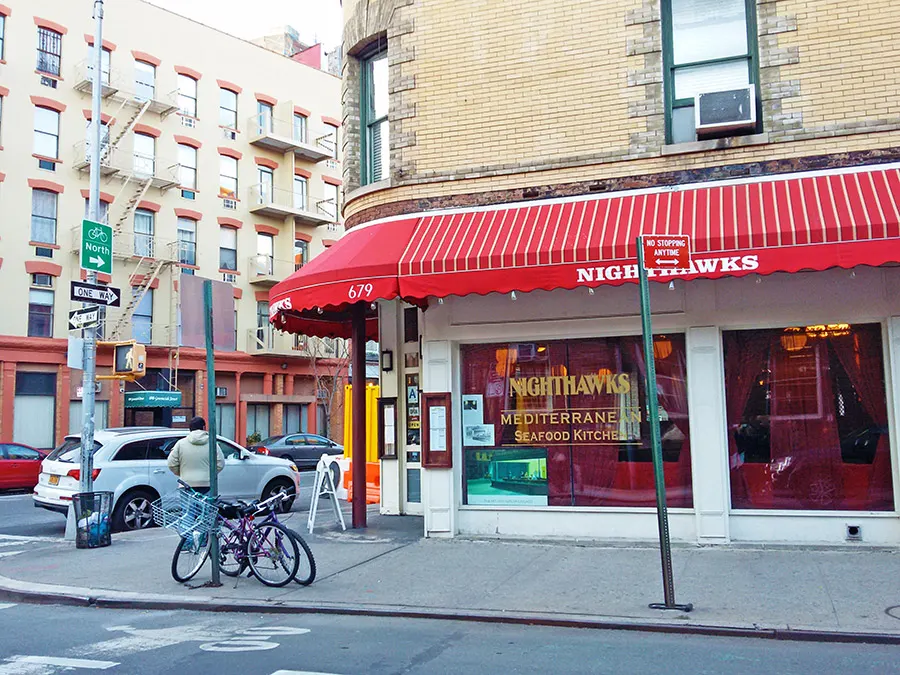
Greenwich Village is the home neighborhood of the celebrated painter Edward Hopper. On many corners you'll find nods to his paintings, like his famous Nighthawks (1942).
Look closely and the corner could well be the one occupied by the Mediterranean restaurant «Nighthawks» (679 Greenwich Street), whose name makes the reference perfectly clear.
History of Greenwich Village
In the early 18th century this area was a Dutch settlers' town next to New York, another «village,» hence the name. As the city expanded north, it ended up being absorbed into Manhattan.
Today Greenwich Village is mostly residential. This once bohemian corner is now favored by New York's upper middle class, who push strollers and walk dogs through the historic, once hippie Washington Square Park.
Celebrities in the Village
This was a key neighborhood for American bohemian and avant-garde culture, and it still is.
The dancer Isadora Duncan, the writer William Faulkner, the great man of theater Eugene O'Neill, the iconic Bob Dylan, Joan Baez, Jimi Hendrix, Barbra Streisand and Simon & Garfunkel have all been among its famous regulars.
Today there are plenty of famous residents in the neighborhood, like Julianne Moore, Uma Thurman, Edward Norton and Vogue's exacting Anna Wintour, so don't be surprised if you run into one of them on the streets of the Village.
The Friends apartment in Greenwich Village
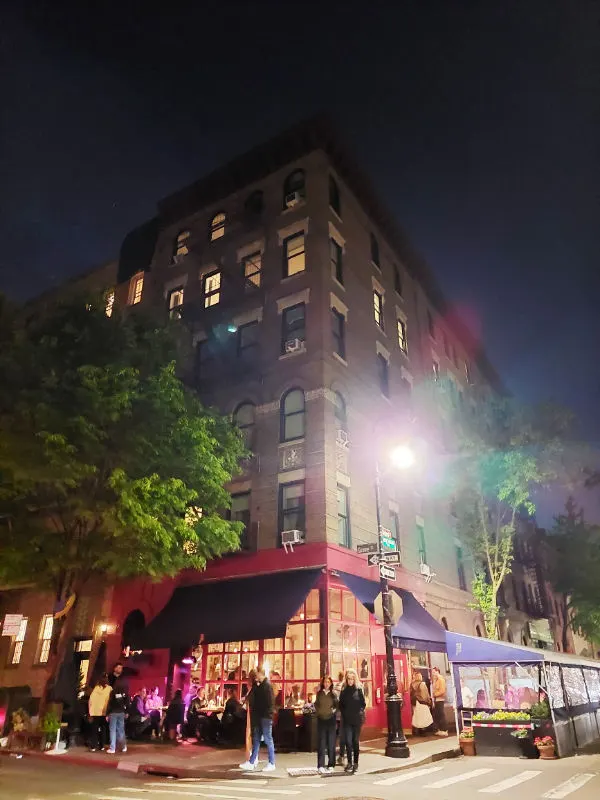
The fictional apartment of the famous Friends is supposedly in the Village, and its exterior is a shot of a building on the corner of Grove and Bedford, even though the sets were Warner Brothers studios far away in California.
Plenty of people are sure to visit after the tragic death of Matthew Perry, the actor who brought the beloved character Chandler Bing to life.
Address
Greenwich Village runs between Broadway and the Hudson River east to west, and between Houston Street and 14th Street south to north
How to get to Greenwich Village
Subway lines A, B, C, D, E, F, M. W 4 Street station
Subway lines N, R. 8 St-NYU station
Subway line L. Union Square-14 St station