
Noguchi Museum: Hours, Tickets and How to Get There
Noguchi Museum: Hours, Tickets and How to Get There
Guía rápida
- The Isamu Noguchi Museum collection
- Indoor/outdoor gallery
- Sculpture garden
- First floor galleries
- Second floor galleries
- Floating galleries
- The Isamu Noguchi Museum shop
- Noguchi sculptures around New York
- News at Rockefeller Center
- Red Cube in the Financial District
- Sunken Garden at Chase Manhattan Bank Plaza
- Unidentified Object
- Ceiling at 666 Fifth Avenue
- 10 Tips to Save on Your Trips
- 👇🏼 Leave your email and be part of something special.
- Deals for your getaway
- 15% off your hotel
The Isamu Noguchi Museum is the only museum in the United States created by the artist himself during his lifetime.
Three years before his death, in 1985, Noguchi opened it in an industrial warehouse in Long Island City. He planned every detail personally, and his touch is obvious everywhere you look.
This moving museum is worth a visit, a chance to dive into the life and work of one of the most important sculptors of the 20th century. Born to an American mother and a Japanese father, he traveled all his life and felt rooted only in his own work.
The Isamu Noguchi Museum collection
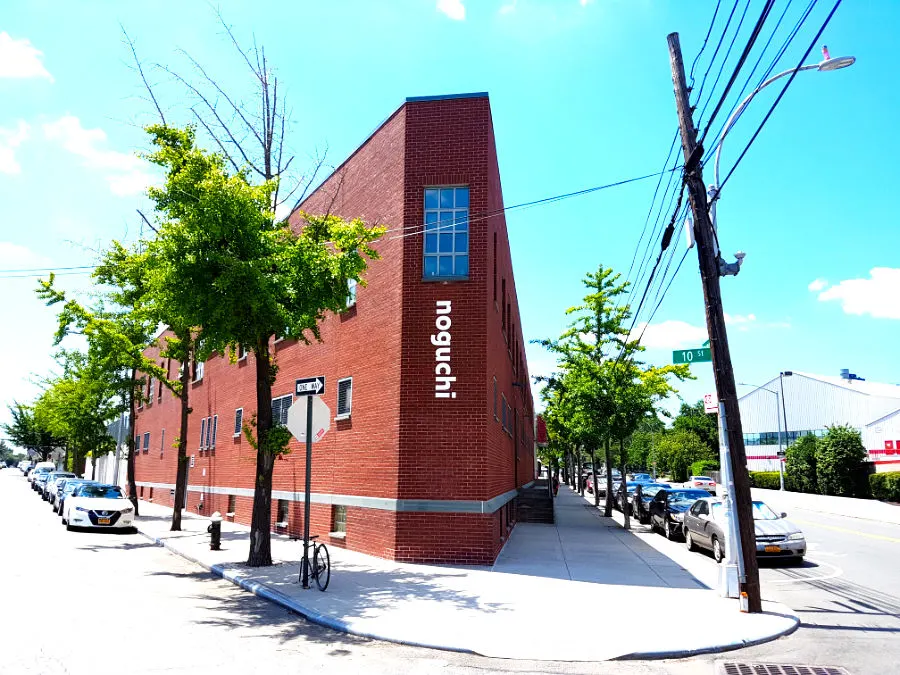
The Isamu Noguchi Museum occupies an industrial building from the 1920s. The sculptor bought it specifically to install his work.
For giving this industrial space new meaning, Noguchi is considered one of the pioneers of the transformation of Long Island City, today an incubator of art and new trends in Queens.
Indoor/outdoor gallery
Visitors enter through a curious gallery that is covered by a roof yet still open to the air. You'll understand once you're there.
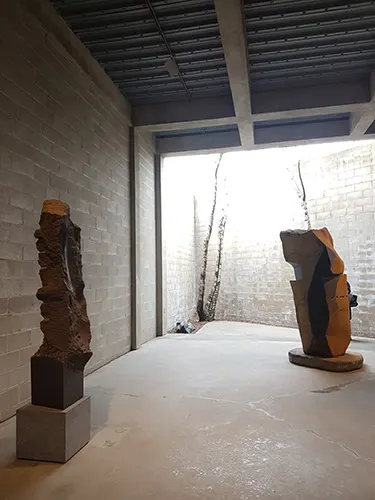
Its concrete blocks and corrugated steel roof make the industrial past of this warehouse plain to see.
Here you'll find Noguchi's latest works, monolithic pieces in basalt stone that appear barely touched by the artist, though if you look closely, every crack is there for a reason.
Noguchi decided to curate the route through the installation in reverse chronological order.
Sculpture garden
From area 1 you go straight into the museum's sculpture garden, a space designed for quiet and contemplation, an oasis in the middle of New York.
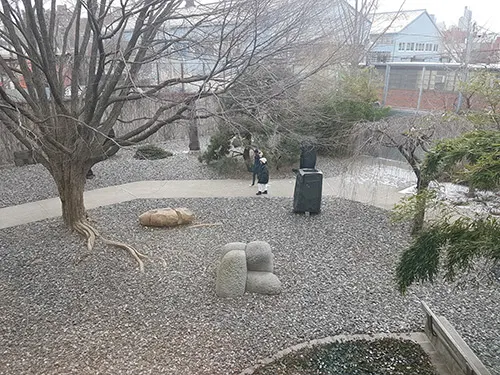
This garden is the product of the artist's exploration of Japanese culture. Beyond his sculptures, Noguchi personally selected every plant and tree in the space.
First floor galleries
The first floor galleries are devoted to the work of the sculptor in stone, from his more figurative marble pieces of the 1960s to the basalt and granite works of the 1980s.
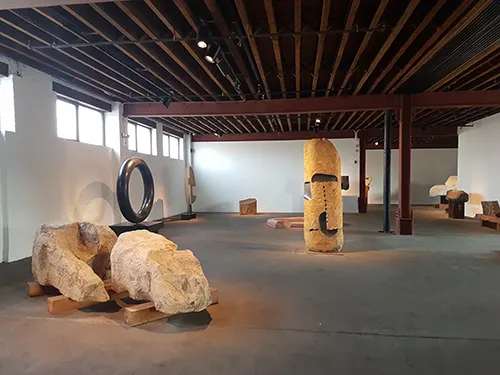
The layout of each gallery and each piece was decided by the artist. It reflects his curatorial intent, playing with natural light and with the greenery beyond the windows.
Second floor galleries
The second floor holds the Isamu Noguchi Museum's temporary exhibitions, all related to Noguchi's prolific output (check the exhibition calendar).
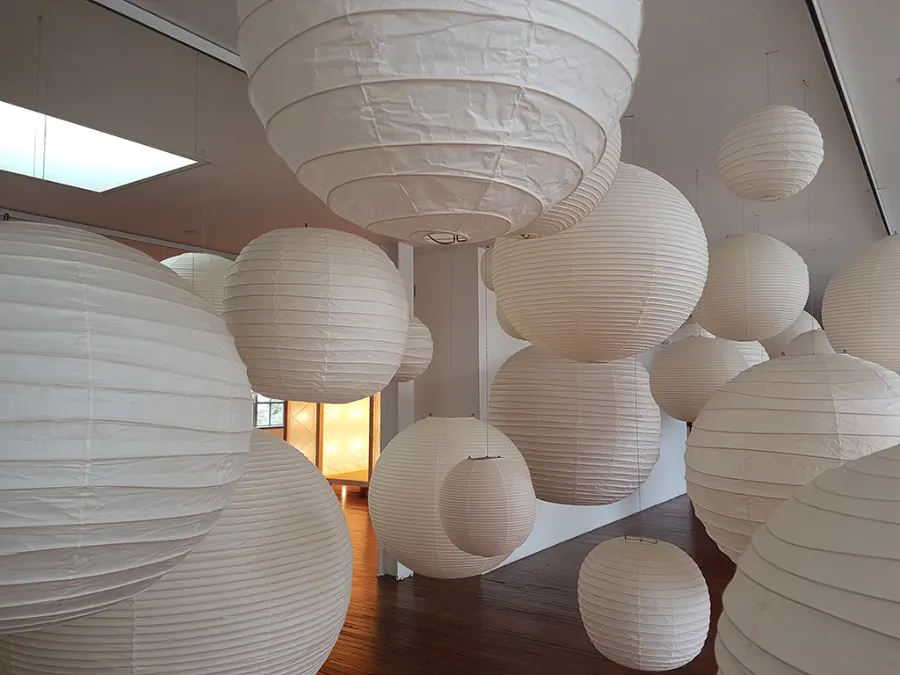
There's plenty to choose from when rotating the shows, because besides sculpting, Noguchi created gardens, furniture, lamps, ceramics and architecture, and he even worked in interior design.
This space also screens a documentary about Noguchi's life and displays some of his archives, which give you context on the life and work of this important Japanese American artist.
Hopefully you'll be lucky enough to catch his paper lamps (akari light sculptures), Isamu Noguchi's light sculptures, inspired by this ancient Japanese craft.
Floating galleries
Noguchi called them the Floating Galleries, since these rooms sit directly above the steel roof of the gallery where you came in (Area 1).
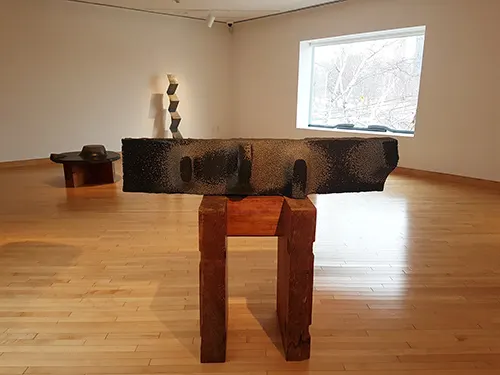
From the windows you can make out Vernon Boulevard in Long Island City and the Isamu Noguchi Museum's sculpture garden.
The Isamu Noguchi Museum shop
Before you leave you can sit down comfortably in the museum shop (on furniture designed by Noguchi, of course) to leaf through books about the artist or grab a coffee to recharge before continuing your day.
There you'll find the famous Akari lamps for sale, along with some sculpture replicas and even Noguchi furniture.
Noguchi sculptures around New York
Over the course of his life, Noguchi was commissioned to create dozens of works for public spaces, most of them in the United States.
In New York City, beyond the sculptures at the museum, you can enjoy five of his works. Two of them are widely recognized and part of the city's urban landscape. Go see them.
News at Rockefeller Center
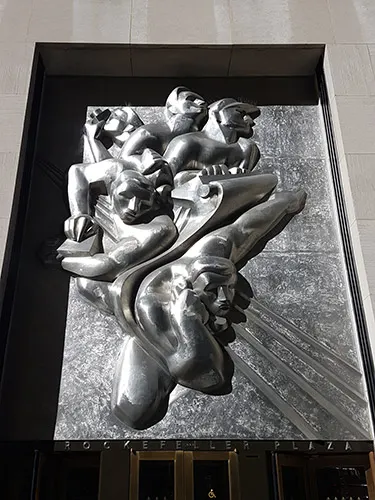
News (1940) is the well-known steel bas-relief above the entrance of 50 Rockefeller Plaza, one of the buildings at Rockefeller Center.
The aim of this piece was to symbolize the activity inside the building, which at the time was the headquarters of the Associated Press.
Red Cube in the Financial District
It's impossible to miss the Red Cube sculpture (1968). This cube stands at 140 Broadway, between Cedar and Liberty streets, in Manhattan's Financial District, very close to Wall Street.
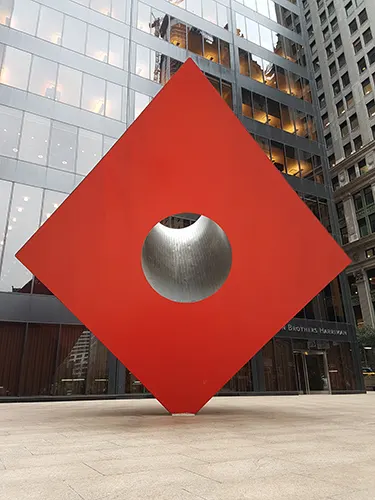
It was commissioned to give shape to this plaza surrounded by office towers.
Sunken Garden at Chase Manhattan Bank Plaza
This stone garden was built between 1961 and 1964 at Chase Manhattan Bank Plaza (28 Liberty Street), also in the Financial District, very close to the Red Cube.
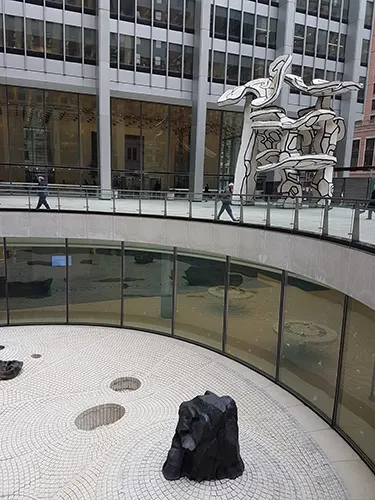
Noguchi brought the installation's seven natural stones directly from Japan's Uji River.
Unidentified Object
In 1979 one of his basalt sculptures was installed on Fifth Avenue at East 82nd Street (1000 Fifth Avenue).
He gave this tall menhir to the Met, which installed it near the entrance.
Ceiling at 666 Fifth Avenue
You can visit the vault Noguchi designed for the lobby ceiling of 666 Fifth Avenue (1958), inspired by falling water.
-o-
Address
9-01 33rd Rd at Vernon Blvd
Long Island City, Queens.
It's very close to Socrates Sculpture Park, which you can take the chance to visit too.
Getting there
Subway
F line. Queensbridge / 21 St station
7 line. Vernon-Jackson station
N and W lines. Broadway station
Prices
Adults $10 / Students and 65+ $5 / Under 12 free
Hours
Wednesday to Sunday 11 am to 6 pm
Closed Monday and Tuesday
Closed 12/25, 1/1 and Thanksgiving
Until the pandemic is behind us, I recommend checking the special entry conditions on the museum's official site.
Map