
Kykuit: Visiting the Rockefeller Mansion in Sleepy Hollow
Kykuit: Visiting the Rockefeller Mansion in Sleepy Hollow
Guía rápida
- What to see at Kykuit
- What does Kykuit mean?
- Building Kykuit
- The design of Kykuit's gardens
- The Rockefeller art collection
- The Rockefeller story
- Guided tour of Kykuit
- How to get to Sleepy Hollow
- 10 Tips to Save on Your Trips
- 👇🏼 Leave your email and be part of something special.
- Deals for your getaway
- 15% off your hotel
Visiting Kykuit means stepping straight into the Rockefeller way of life, the powerful New York family that was once richer than the U.S. government itself.
This estate was the main residence of four generations of Rockefellers. It sits in Sleepy Hollow, a town in the Hudson River Valley that you can reach in 50 minutes by train from Grand Central Terminal.
What to see at Kykuit
If you love New York history, Kykuit gives you plenty of context on the dynasty behind Rockefeller Center and other major companies around the world.
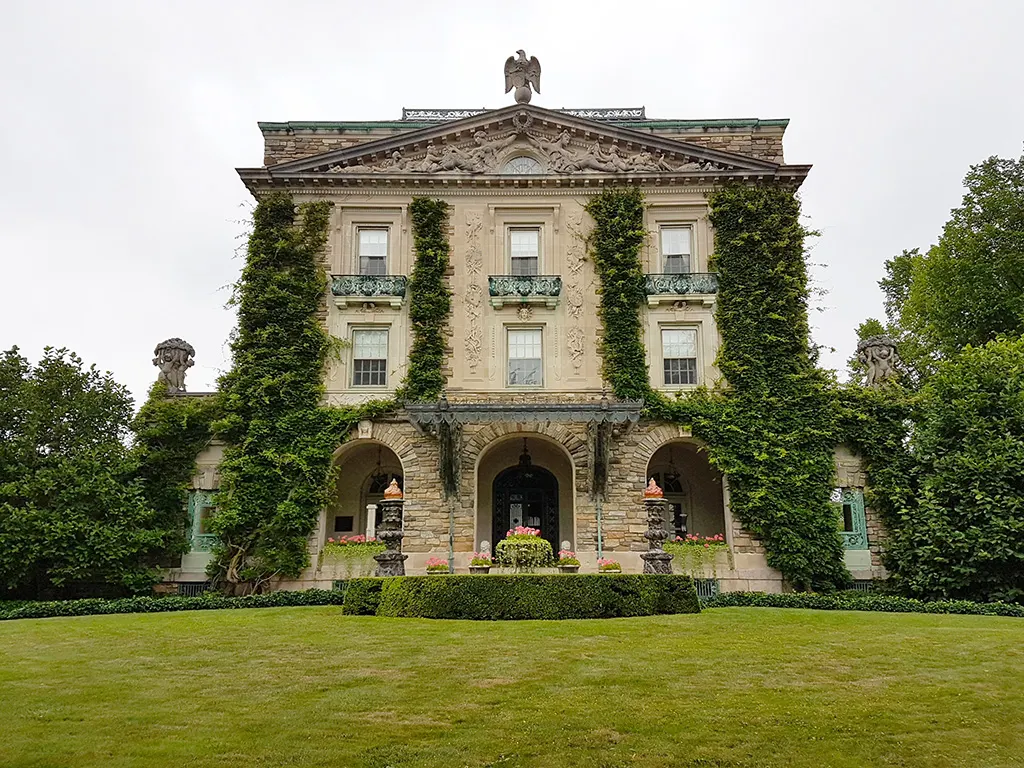
The only way to visit the Rockefeller mansion is on the Kykuit tour run by Historic Hudson Valley, an organization the Rockefellers themselves created in the 1950s to support the region's cultural development. You'll find all the details on their site.
The day I did the tour I also took the chance to see other spots in Sleepy Hollow, named after Washington Irving's tale of the Headless Horseman. A highly recommended trip.
What does Kykuit mean?
Kykuit, pronounced «KY-cut,» is a Dutch word meaning «lookout» (remember that New York was a Dutch colony before it was English).
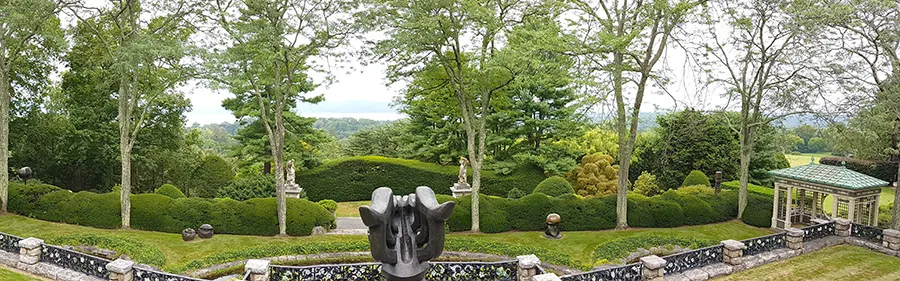
It sits atop Pocantico Hills, with a flawless view of the Hudson Valley and, on clear days, the New York skyline.
It was that privileged view that led John D. Rockefeller, the family patriarch, to build his private residence here, on a property of 1,380 hectares (about 3,400 acres, roughly twice the size of Chile's Cerro San Cristóbal!).
Building Kykuit
The Rockefellers moved into Kykuit in 1913. It's a four-story house with 40 rooms and a pretty eclectic architectural style.
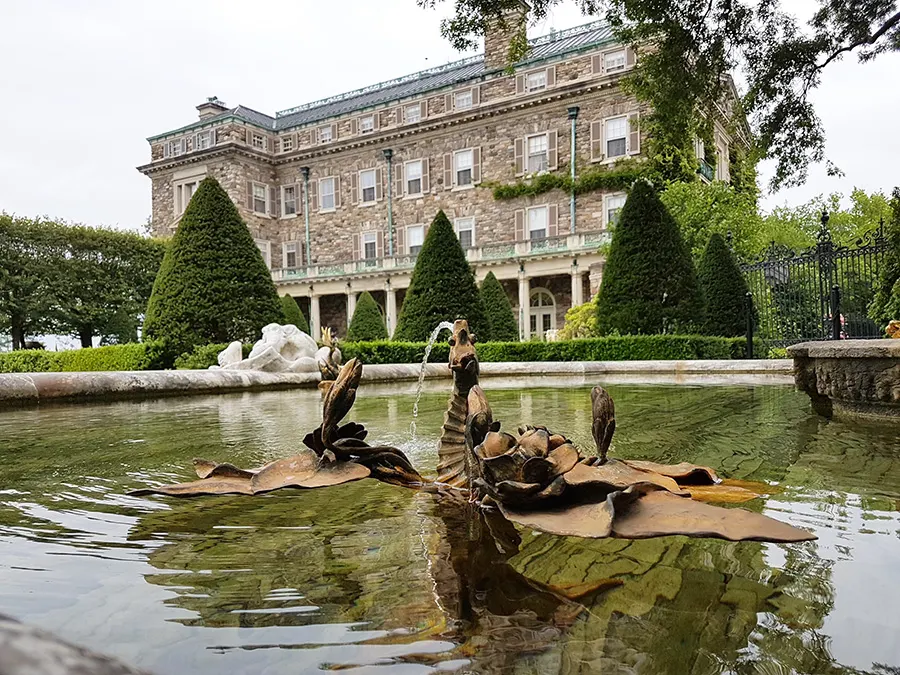
Inside, it's full of trophies from the family's travels. The ancient ceramics and Chinese porcelain stand out, one of John Rockefeller Jr.'s great passions (photos aren't allowed inside the house, so I can't show you).
But the person whose fingerprints you'll see most is the last resident: Nelson Rockefeller, governor of New York for many years and later vice president of the United States.
Nelson Rockefeller was the one who decided that upon his death the house should open to the public and be preserved exactly as it was. That's why Kykuit is frozen in 1979, the year he died.
The design of Kykuit's gardens
The loveliest part of the house is its Beaux-Arts gardens. Kykuit was the family's summer residence, and the whole point was to enjoy nature and good weather as much as possible.
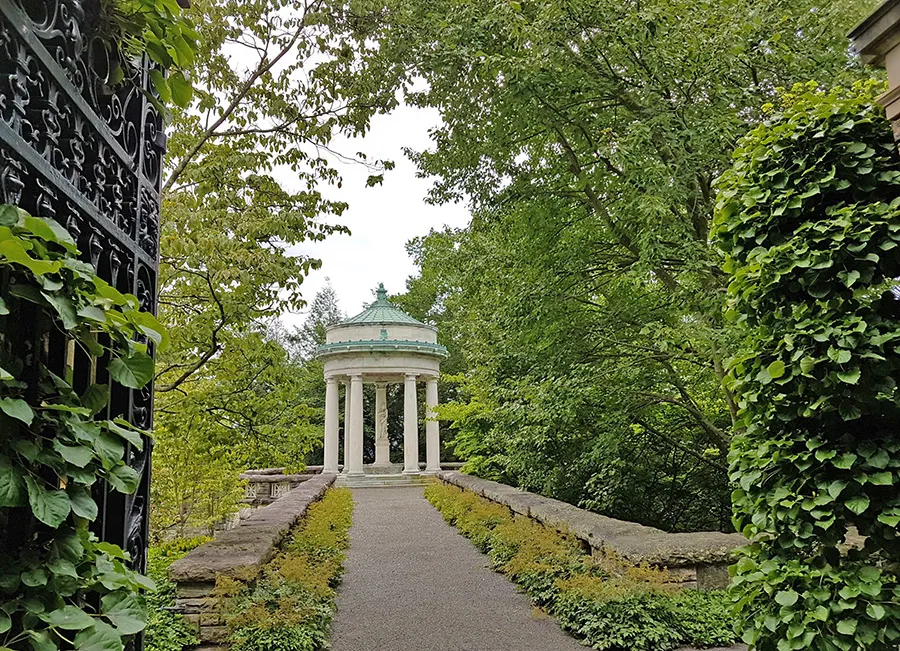
The design was commissioned from Frederick Law Olmsted, the same landscape architect behind Central Park.
In the end it was Rockefeller Senior himself who planned several of its corners and planted mature trees brought in from all over the world.
Beyond the greenery, you'll find terraces with fountains, galleries, pavilions and sculptures by well-known artists including Picasso, Brâncuși, Jean Arp, Alexander Calder, Giacometti, Henry Moore and Isamu Noguchi.
The Rockefeller art collection
Every corner of the house holds art (no surprise, the family was among the founders of the MoMA).
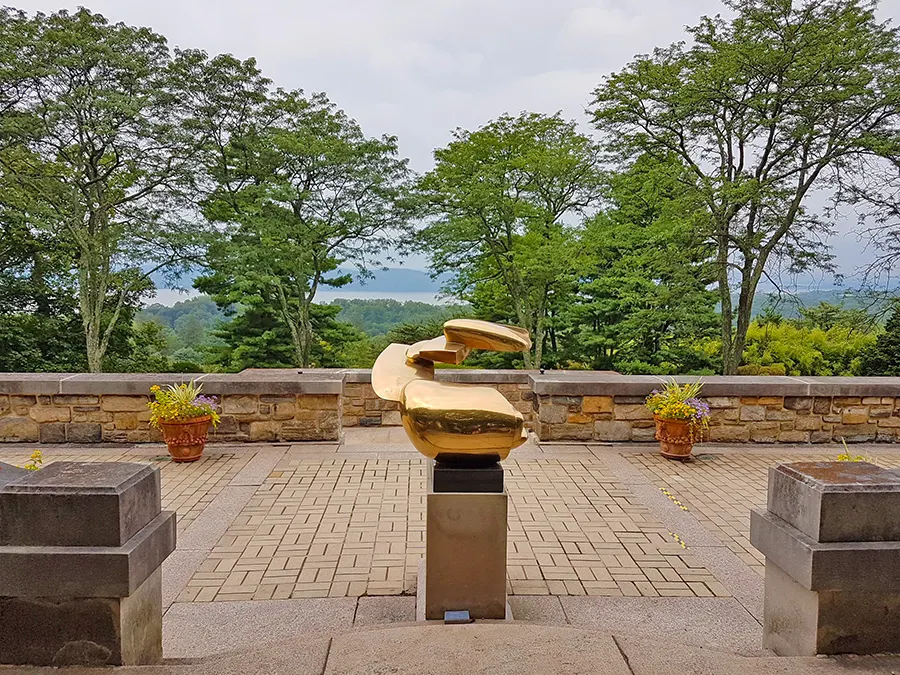
The one who seriously set out to build up Kykuit's private art collection was Nelson Rockefeller, third generation of the family, who as I mentioned became governor of New York and vice president of the United States.
Nelson turned the basement into a private art gallery where you'll see works by Chagall and Warhol, among others, plus a complete series of tapestries based on Picasso designs, made under the artist's own supervision at the family's request.
The Rockefeller story
John D. Rockefeller founded Standard Oil in 1870, which over the years became the giant Exxon Mobil. So yes, the Rockefeller fortune comes from oil.
A fascinating detail: Nelson Rockefeller spoke fluent Spanish, since he ran several family businesses in Venezuela (among them the Creole Petroleum Corporation, Standard Oil's Venezuelan subsidiary) along with other Latin American oil companies.
By the mid-20th century the Rockefeller investments had diversified into finance, a field where David Rockefeller reigned as chairman of Chase Manhattan Bank.
They moved into politics too, with Nelson Rockefeller as governor of New York (1959-1973) and vice president of the United States (1974-1977).
New Yorkers hold them in high regard, because through the Rockefeller Foundation the family carried out major philanthropic work in the U.S. and abroad. Case in point: they helped found the MoMA.
Guided tour of Kykuit
Kykuit tours must be booked in advance on the site of Historic Hudson Valley, the organization the Rockefellers created in the 1950s to support the region's cultural development.
There you choose the type of tour and the time slot. The classic tour is the one I describe in this post, and it runs about 2 hours and 15 minutes.
Plan this outing well ahead of time, since daily spots are limited and tours only run during the warm months of the year.
Make a day of it and see other fascinating places in Sleepy Hollow.
Address
The tour departs from the Kykuit Visitor Center in Sleepy Hollow (381 N Broadway, Sleepy Hollow)
Prices:
There are several types of tours, with prices ranging from $15 to $40.
If you take the train from Grand Central Station, show your tickets at the box office and they'll refund you $5 per traveler 🙂
Hours:
The house is open from May through mid-November. For exact dates, check the official site.
9 am to 5 pm
How to get to Sleepy Hollow
Sleepy Hollow is 50 minutes by train from New York City.
Take the Metro-North Hudson Line from Grand Central Terminal toward Tarrytown, which is your stop.
There are several departures a day, and you can check them on the MTA website.
Once you get to Tarrytown station you can grab a taxi to the Visitor Center, or just walk, since it's very close (map out your route on Google Maps).