
New York Subway: How to Ride It Like a Local
New York Subway: How to Ride It Like a Local
Guía rápida
- How the New York City Subway Works
- How to pay for the subway with MetroCard and OMNY
- How the MetroCard works in 2025
- How to pay for the subway with OMNY
- Best app for planning NY subway trips
- New York Subway hours
- How to plan your connections on the NY Subway
- Same platform, different lines
- Uptown or Downtown?
- How to tell local and express trains apart
- Watch out for service changes
- Tips for riding the New York City subway
- Fun facts about the New York City subway
- 10 Tips to Save on Your Trips
- 👇🏼 Leave your email and be part of something special.
- Deals for your getaway
- 15% off your hotel
The New York subway is legendary, more than a century old, and enormous. It's easy to get lost in its sprawling web of lines and connections.
But don't worry! After reading how the New York subway works, you'll ride it like a true New Yorker.
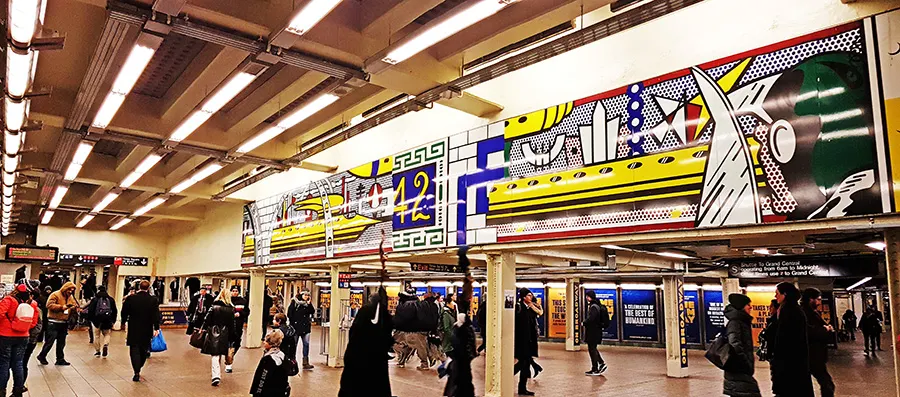
How the New York City Subway Works
The New York subway is the most famous in the United States and one of the best known in the world, thanks to its hundreds of appearances in movies and shows filmed in New York.
The subway is the fastest, safest, most efficient way to get around New York, and it takes you just about everywhere, with very few exceptions like Staten Island, the only NYC borough with no subway lines.
That's why, for each of the attractions in New York, I'll point out the closest subway station (though you can also get there on NYC buses if you prefer).
Let's clear up once and for all the common questions we all have the first time we face the famous NYC Subway (click to jump straight to each section):
- How to pay for the subway
- How the MetroCard works in 2025 and OMNY (the new way to pay for the subway in NY)
- What the subway hours are
- How to plan your connections
- Several lines on the same platform?
- Uptown or Downtown?
- How to tell local and express trains apart
- How to keep up with service changes
- General tips
- Subway trivia
How to pay for the subway with MetroCard and OMNY
To ride the subway you need to buy a MetroCard transit card, or you can use the OMNY contactless payment system, which is fully up and running on the subway and NYC city buses (at that link I explain how it works and what OMNY costs).
It's worth trying OMNY on your next trip, since the MetroCard will stop being sold at the end of 2025. In 2026 it will be completely replaced by the OMNY payment system.
The deadline for using the MetroCard in New York hasn't been officially set by the Metropolitan Transportation Authority (MTA) yet, but they've already announced it will be discontinued at the end of 2025. For now, you can still use the MetroCard on New York subways and buses.
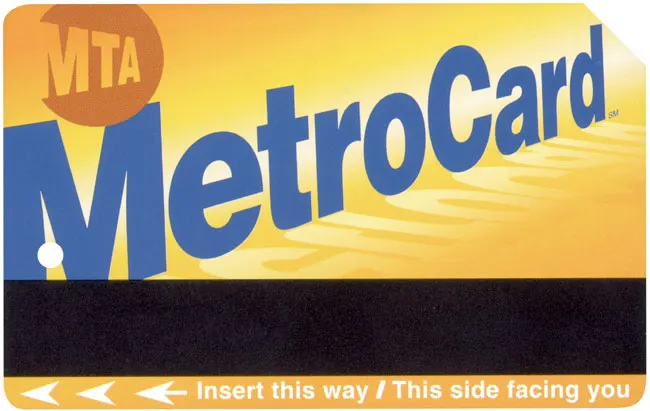
You buy the MetroCard at the automatic machines -MetroCard Vending Machines- available in most stations (the entrance of each station indicates whether there's a machine or where the nearest one is).
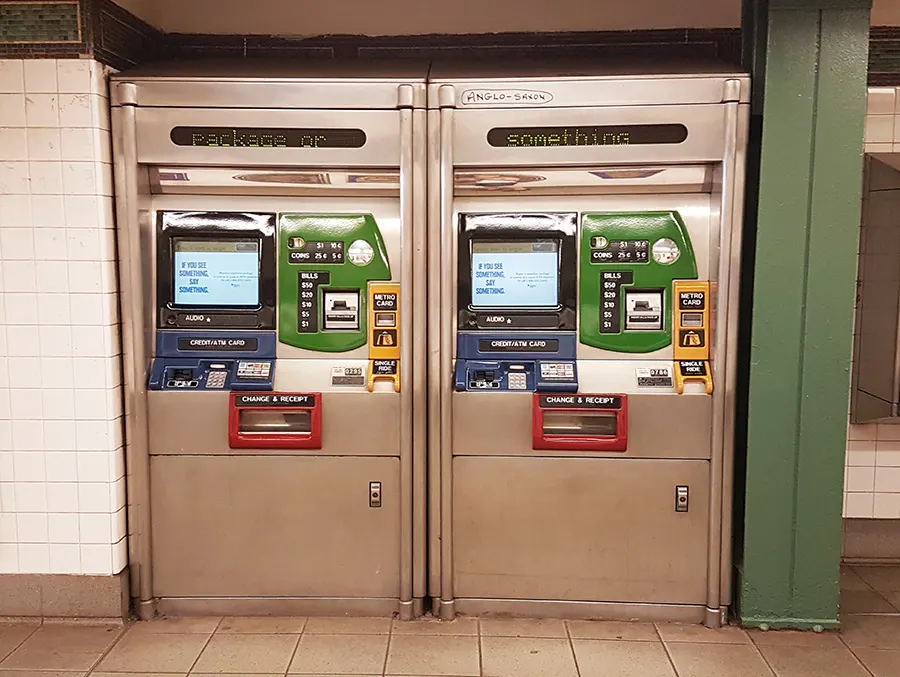
You can pay with cash, debit cards, or credit cards.
Check out the page on New York subway fares in 2025 for detailed information on prices and types of transit cards.
How the MetroCard works in 2025
The MetroCard is New York's public transit card (it works on the subway and on local buses). And as I mentioned, it will be replaced at the end of 2025 by the OMNY contactless payment system.
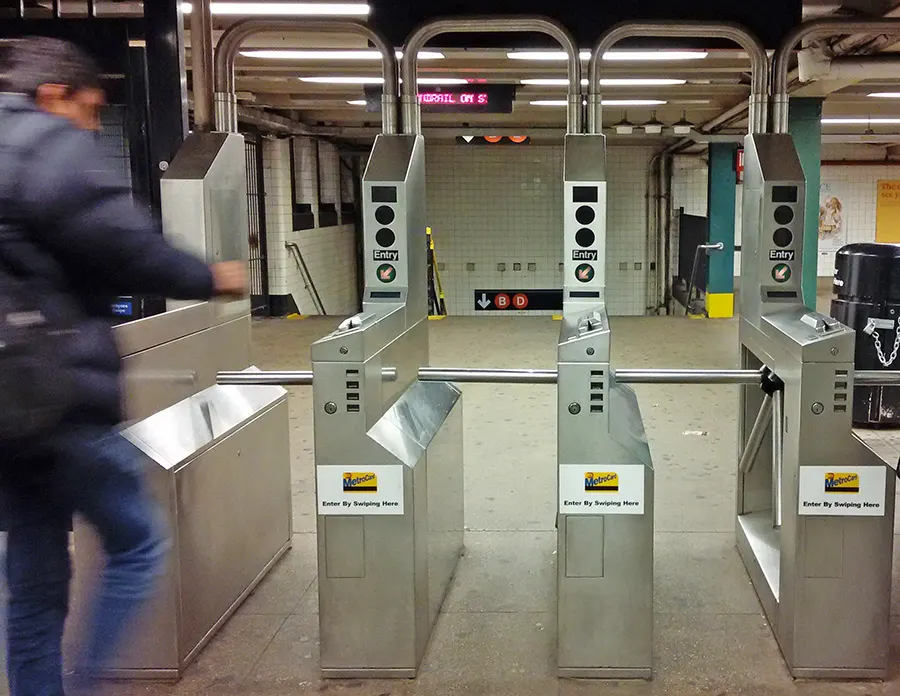
You need to swipe the MetroCard at the turnstiles every time you enter the system.
There are several types of cards. To pick the one that suits you best, read how to use the MetroCard.
On top of that, the MetroCard works on the AirTrain that connects JFK airport with the city for just a few dollars, and also on the PATH to New Jersey.
How to pay for the subway with OMNY
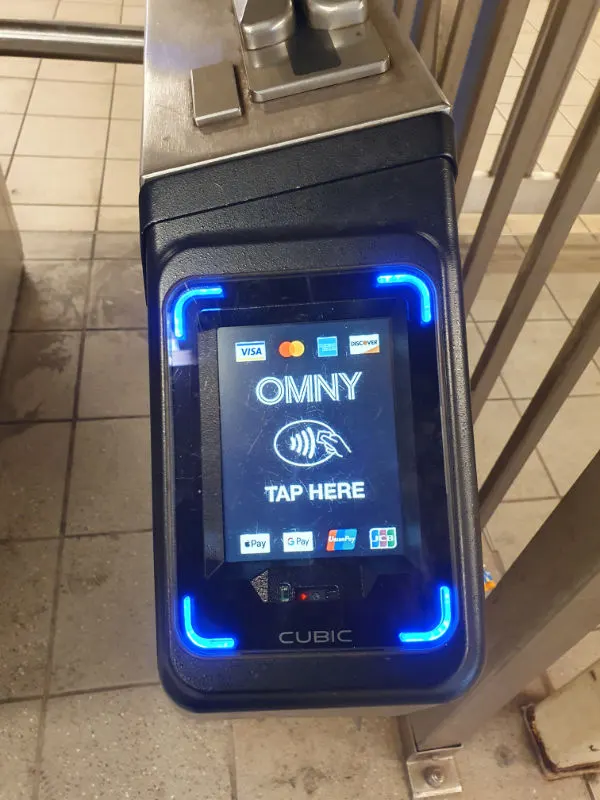
To ride the subway with OMNY, just tap a contactless credit or debit card, a smartphone, a smartwatch, or an OMNY card on the readers at the subway turnstiles and you're in.
No sign-up, no app to download. Read all the details on paying for the subway with OMNY.
Best app for planning NY subway trips
The best New York Subway maps (MTA) these days are in mobile apps (Google Maps is the app I recommend for planning trips on NYC public transit).
They update in real time with every incident and route change, which are very frequent in a subway network that runs 24 hours a day, all year long.
New York Subway hours
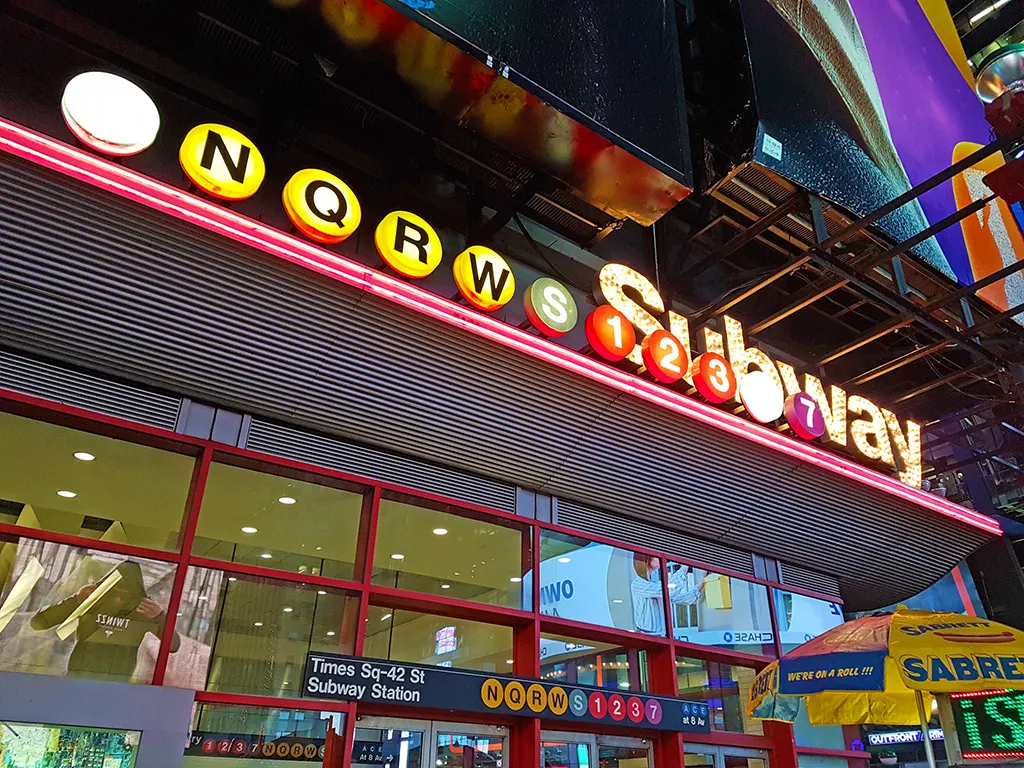
The New York Subway runs 24 hours a day, every day of the year.
The worst months of the pandemic were one of the only times in the history of the New York subway when service was halted for a few hours overnight. Nothing like that had ever happened before.
Train frequency drops noticeably between midnight and 6 a.m., and it's also lower on weekends and holidays.
If you're in a hurry or want to get back to your hotel quickly after a night out or a concert in New York, it's worth grabbing one of the New York taxis; if there are a few of you, it pays off.
How to plan your connections on the NY Subway
It's very easy to plan your trips on NY public transit using Google Maps.
There's free Wi-Fi in several stations and other spots around New York, but to play it safe consider buying a digital e-SIM, for example.
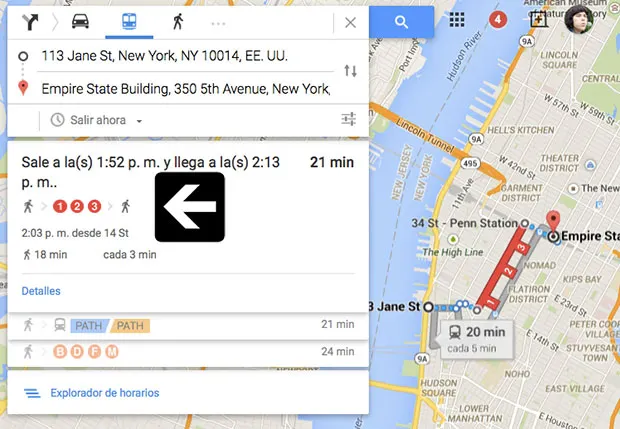
You'll be able to check the best connections and estimated travel times in real time. They also post service changes, which are frequent in a system that runs every day of the year, 24 hours a day.
If you get lost a couple of times, don't feel bad. It happens to all of us, even to people who live in New York 😜.
For example, the first time I was in the city, I wandered around for almost 20 minutes trying to find the exit in the enormous Grand Central Terminal!
If you're unsure about anything, ask. New Yorkers love helping travelers!
Same platform, different lines
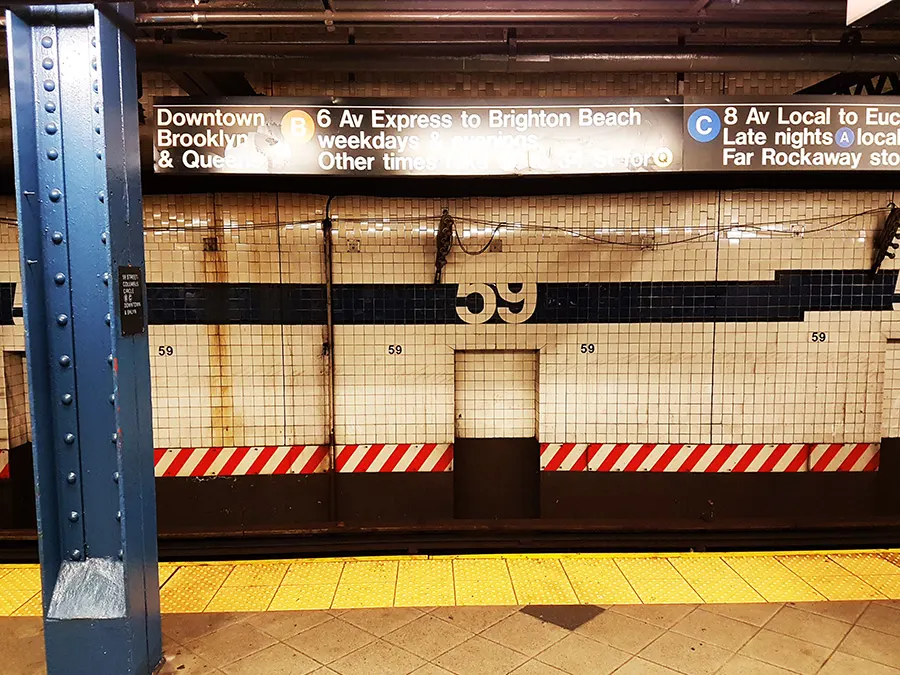
Never forget that different lines can run through the same station, and even the same platform (especially at the busiest ones).
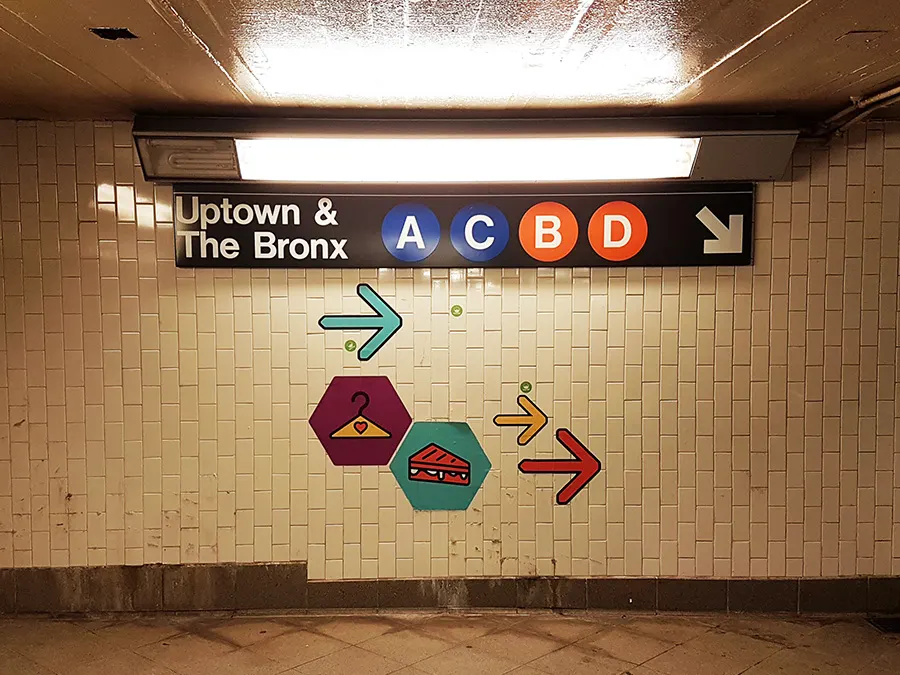
Always keep an eye on the signs posted throughout the station and on the platforms, and on the electronic screens in stations that have them, which announce the next trains arriving.
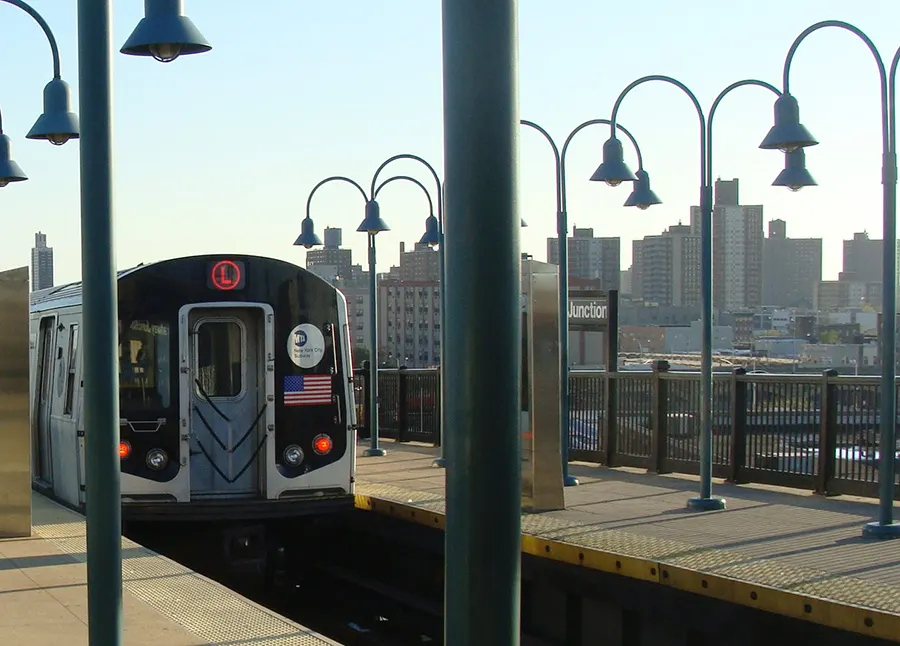
It's also important to look closely at the number or letter on the front and sides of the train before you get on.
Uptown or Downtown?
To avoid trouble, be clear about where you're starting from and where you're heading. With that in mind, you'll know whether to take the entrance toward Uptown Manhattan (northern Manhattan) or Downtown Manhattan (southern Manhattan).
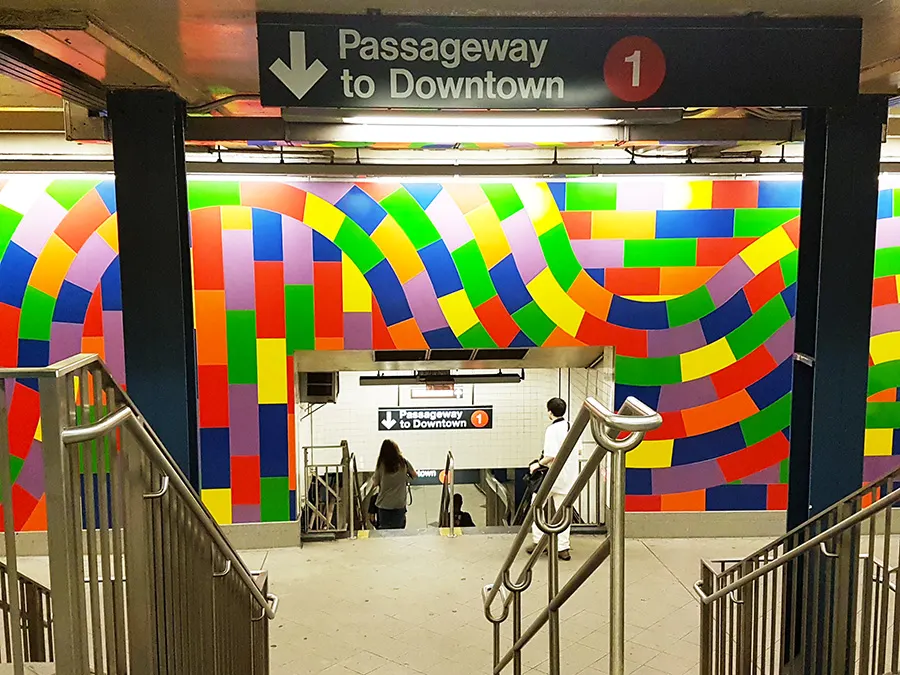
If you're unsure, check the line information on the signs above the platforms and on the station columns.
How to tell local and express trains apart
Some lines have local trains and express trains. Local trains stop at every station and express trains stop only at certain ones.
There are several ways to tell local trains from express trains:
1) The easiest one is to check the lit display on the front and sides of each train to see whether it says «local» or «express».
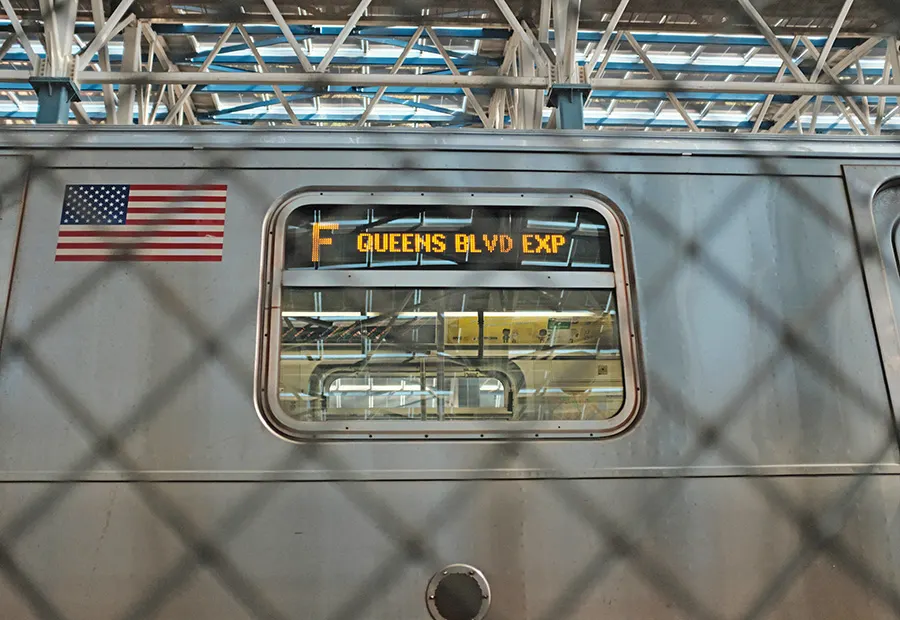
2) On station signs and on the lit side displays of each train, if the line number or letter sits inside a circle it's a local train, and if it's inside a diamond it's express (with exceptions like the 2 and 3 lines in Manhattan, which run express only)
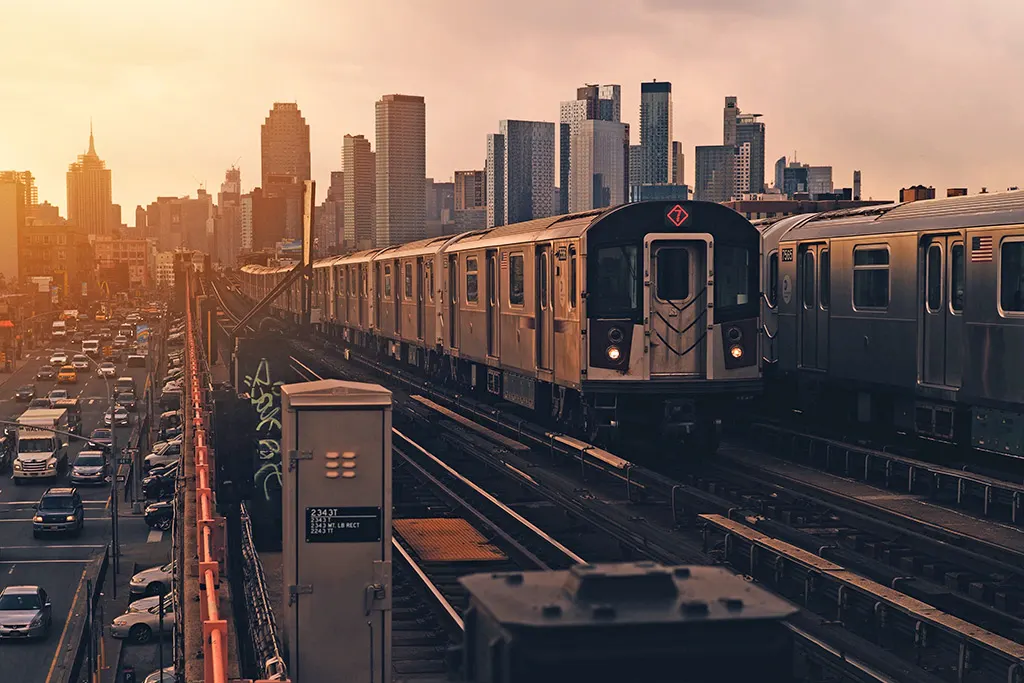
3) On subway maps, lines marked with a white circle are express, and if the circle is half white and half black it means that line or station has both services
4) Bigger stations usually have three or four tracks, with the outer ones for local trains and the center ones for express trains.
Taking an express train is very handy if you're going a long distance, since the time savings add up.
Now, if you get on one by mistake it's no big deal. The worst that happens is you watch your station fly by and have to get off at the next stop and catch a local going the other way 🤣.
Watch out for service changes
Keep an eye out for posters announcing planned service changes taped to columns and walls in the stations, especially on weekends.
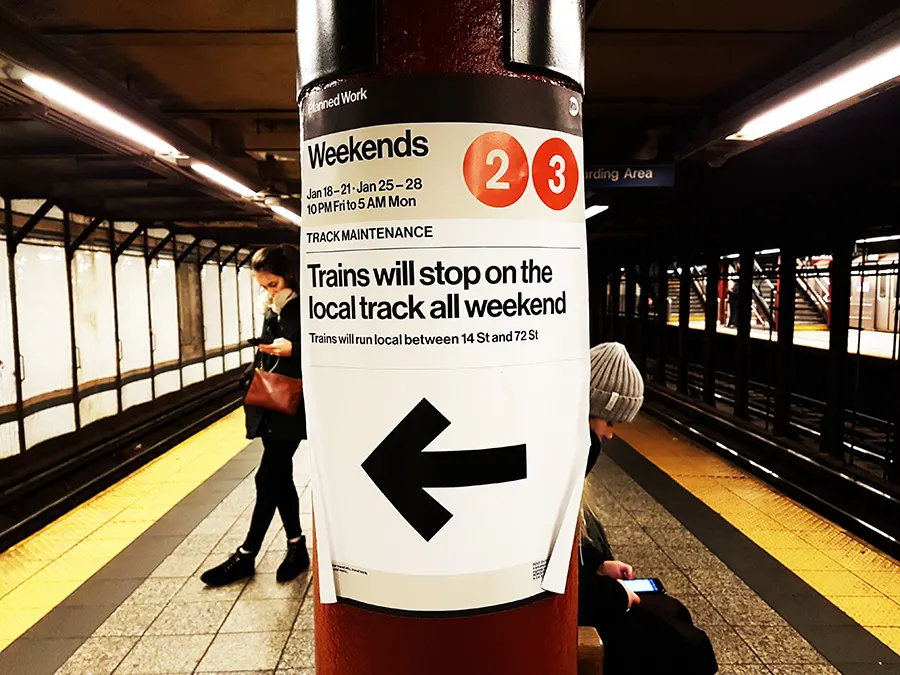
You'll also see them on the digital screens on the platforms and sometimes hear them over the loudspeakers.
Tips for riding the New York City subway
These tips will help you have a better experience riding the New York subway:
1. Let people off before you get on
As in most subway systems around the world, when a train pulls into the station the unwritten rule is to stand to the sides of the doors, let passengers off, then board.
2. Watch out for short trains
Plenty of trains are shorter than the platform, so look at where people are standing and do the same. If you wait at the wrong end, you may not make it onto the train.
3. Don't sneak in without paying
Don't try to enter stations through the exits (even if you see plenty of freeloaders doing it). A loud alarm goes off, and if a station agent catches you, you'll be in for a very bad time.
4. Hold on tight
It's important to hold on before the train pulls out. The subway loves to mess with riders, lurching forward and then slamming on the brakes. Honestly, I don't know why they do it, but they do. So grab on unless you want to end up sitting in a stranger's lap.
5. You can travel with luggage on the subway
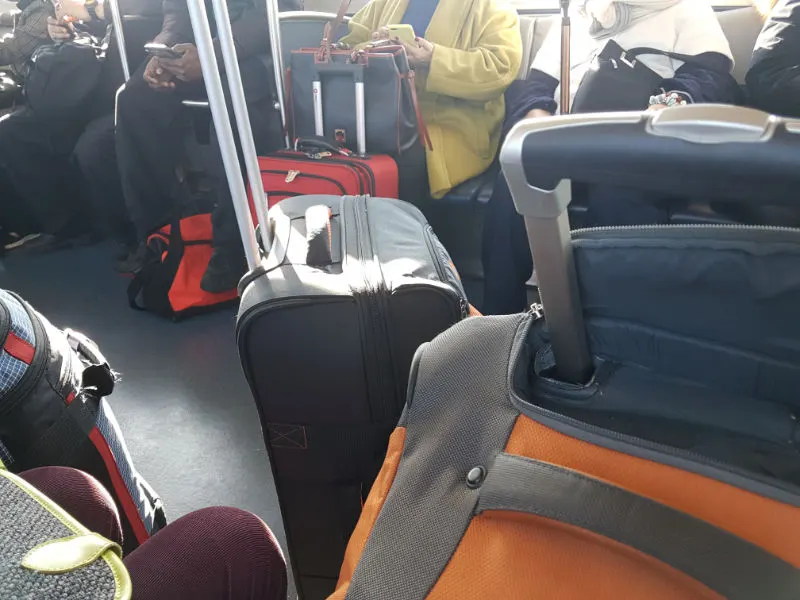
If you're hauling suitcases or big bags, don't worry, the subway allows them (it's the cheapest way to get to and from New York's airports). Just move toward the doors as you get close to your station so you have time to get off.
6. Kids under 3 ride free
Children under 3 or shorter than 44 inches (112 centimeters) ride free.
7. Promotions
When you're heading into one of the hundreds of museums in New York, check whether there's a MetroCard promotion (they're common and can save you a few dollars).
8. Don't be shy about asking
When in doubt, ask another passenger (not the station agents, who tend to be pretty grumpy).
New Yorkers may have a reputation for being rude, but on the subway they're angels. Everyone has gotten lost in this underground maze at some point, and just like in Central Park, on the New York subway everyone is equal.
Fun facts about the New York City subway
Some New York subway numbers are staggering: it's the largest urban transit system in the United States, with 26 lines running in sync, 468 stations, and an average of 5 million riders on a weekday.
It runs 24 hours a day, 7 days a week, something only 3 subway systems in the world do.
Another interesting fact is that around 40% of the New York subway‘s tracks are elevated rather than underground, which you might not guess from the name.
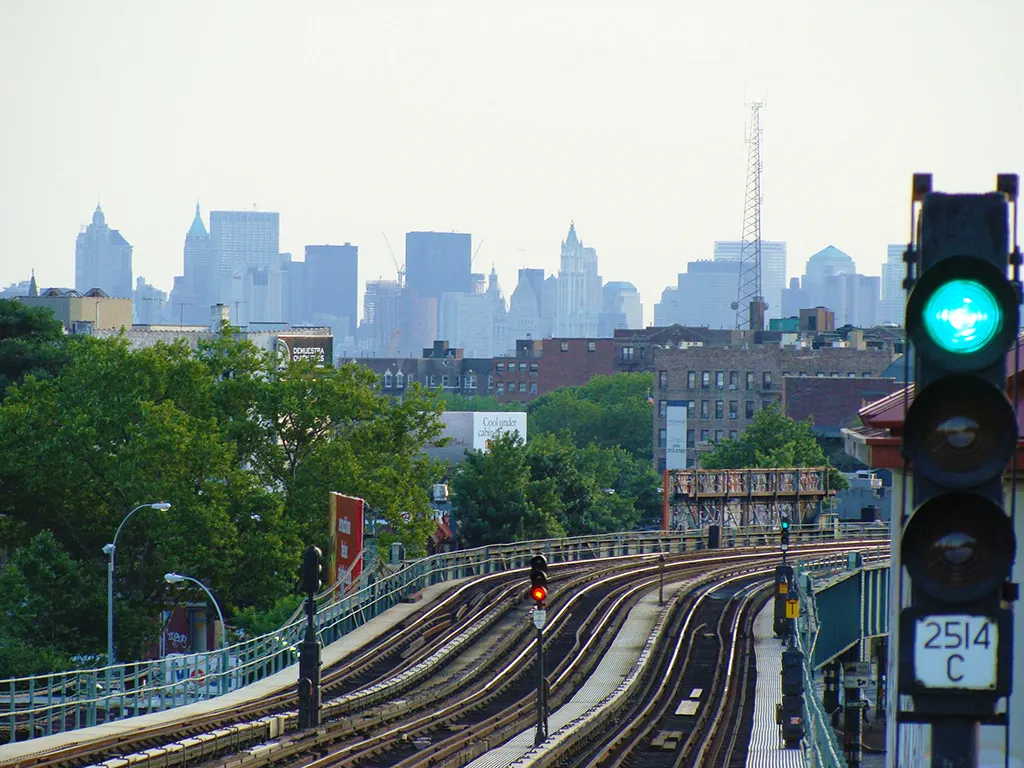
Those structures, especially the older steel ones, are what give so many Brooklyn neighborhoods and Queens neighborhoods their signature look.
🐢 The New York subway is one of the slowest in the United States, with an average speed of 17 miles per hour (27 km/h). The reason is simple: the stations are very close together.
🌆 According to the MTA's latest official figures (2022), the busiest subway stations in NYC are:
- Times Square station: 45 million people over the year!
- Grand Central Terminal station: 23 million people a year.
- 34th Street/Herald Square station: 21 million riders.
- 14th Street/Union Square station: 18 million riders.
Have a great trip!