
NYC Bus Guide: Routes, Fares and How to Ride
NYC Bus Guide: Routes, Fares and How to Ride
Guía rápida
- How to Ride the Bus in New York
- Bus fares
- New York bus maps and routes
- How to spot bus stops
- Frequency and schedules for New York buses
- Local buses vs. express buses
- Planning your trips
- Requesting your stop on New York buses
- Riders with limited mobility
- 10 Tips to Save on Your Trips
- 👇🏼 Leave your email and be part of something special.
- Deals for your getaway
- 15% off your hotel
Before we get into this guide to New York City buses, let me be clear about one thing: the most efficient way to get around is the New York subway. It reaches just about every corner of the city and it's the fastest option.
That said, if the subway isn't your thing, if you're covering short distances, if you want to see the city while you travel, if you have limited mobility, or if you're in Staten Island (the only borough with no subway), then taking the bus is a solid choice.
How to Ride the Bus in New York
Like the subway, New York buses run 24 hours a day, 7 days a week.
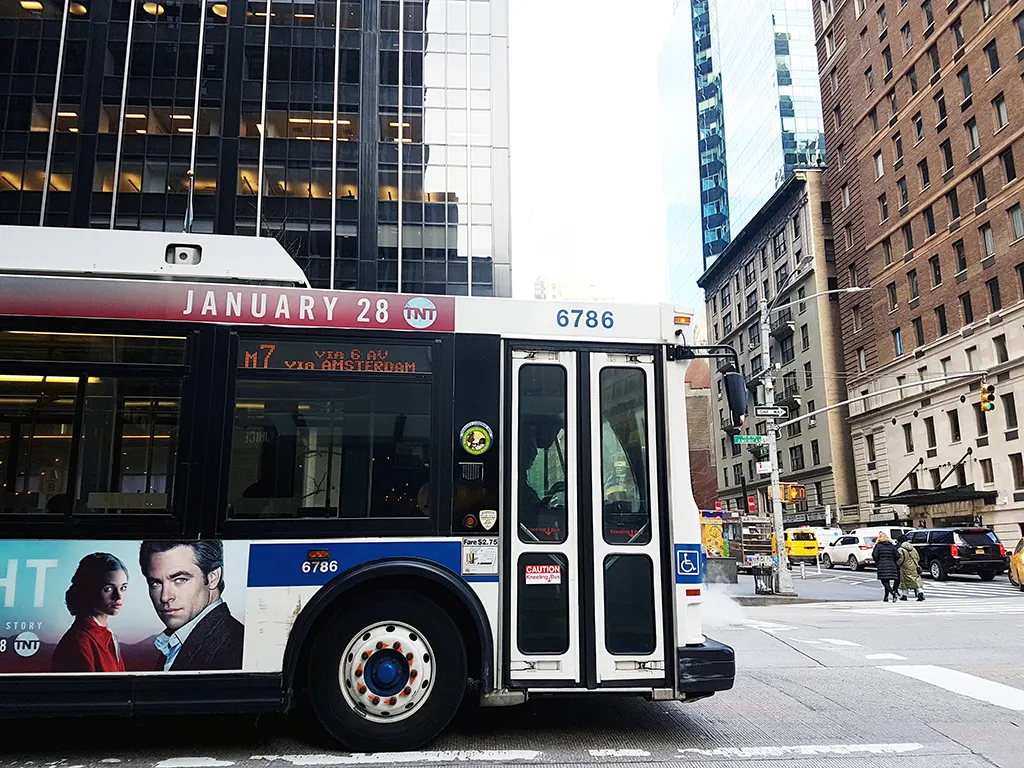
The catch is that in New York, especially in the neighborhoods of Manhattan, traffic is brutal, which makes street-level transit slow and chaotic.
In fact, most New Yorkers don't take the bus, especially at rush hour, to avoid getting stuck in one of the city's legendary jams.
But if you want to rest your legs for a while and watch the streets and the people of New York go by through those big panoramic windows, then buses are perfect public transportation!
With that warning out of the way, here are some practical tips for riding New York buses.
Bus fares
New York buses and the subway are one integrated system run by the MTA (Metropolitan Transportation Authority), so you'll use the same payment methods as on the subway:
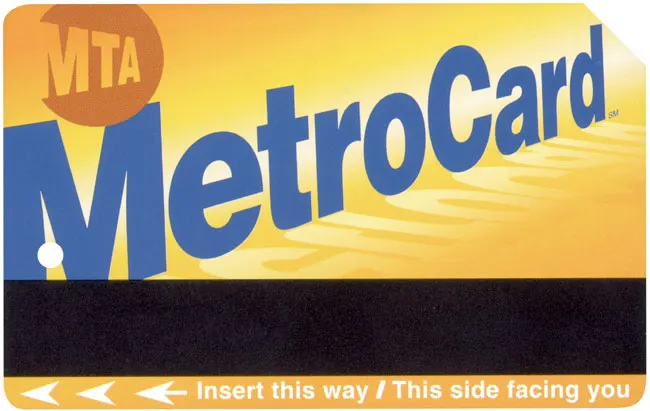
- The MetroCard transit card
- The new OMNY contactless payment system, which as of early 2023 is fully up and running on the subway and city buses in NYC (at that link you'll find how OMNY works and what it costs).
I'd suggest giving OMNY a try on your next trips, since the MetroCard will stop being sold in 2024, when it will be fully replaced by the OMNY payment system.
Buses use the same fares as the subway (single ticket, pay per ride, and unlimited 7-day and monthly passes), with one difference: you can also pay your fare in cash if you have exactly $3.25 in coins (no pennies and no bills).
The driver doesn't handle money, you drop it straight into a machine, so if you don't have a MetroCard or coins, it's time to walk New York.
The advantage of using the MetroCard is that you can transfer bus-to-subway, subway-to-bus, or bus-to-bus on a single fare, as long as it happens within two hours. That doesn't apply if you pay cash.
New York bus maps and routes
The bus system has more than 300 routes spread across the five boroughs of New York.
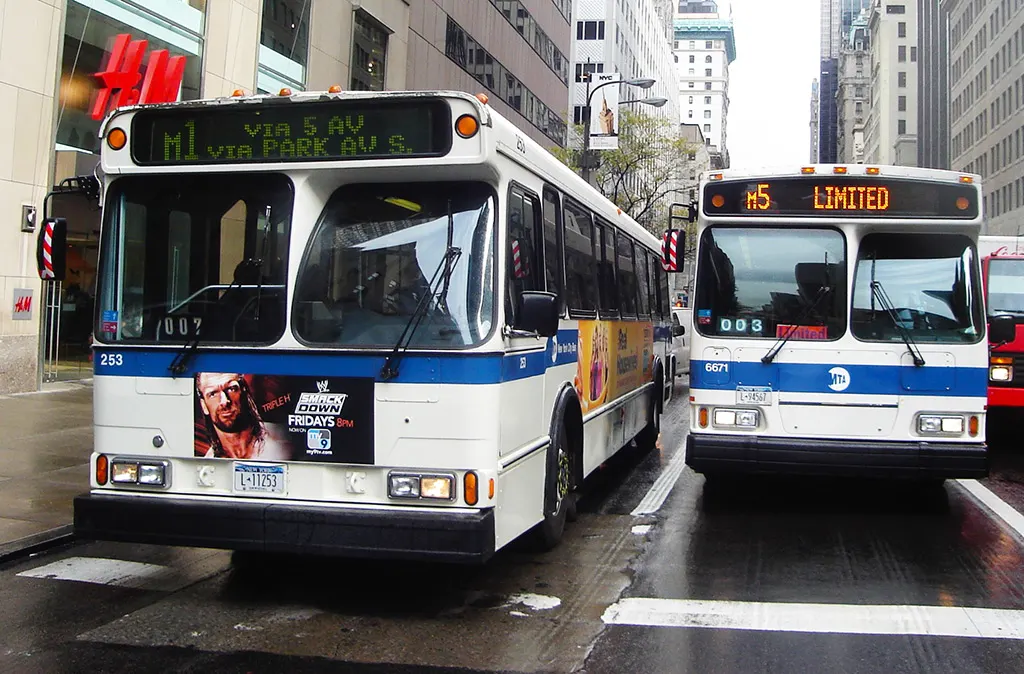
Each route is named starting with the initial of its borough, so M routes are Manhattan, B is Brooklyn, Q is Queens, S is Staten Island, and Bx is the Bronx.
You'll see it on the lit signs on the front and sides of the buses.
If you want to plan your trip, you'll find route maps organized by borough on the MTA site. Or, easier still, use Google Maps to plan your routes, which works very well in New York.
How to spot bus stops
Bus stops come every two or three blocks and are marked by a blue sign, usually on a pole at street corners, that often lists schedules and the route.
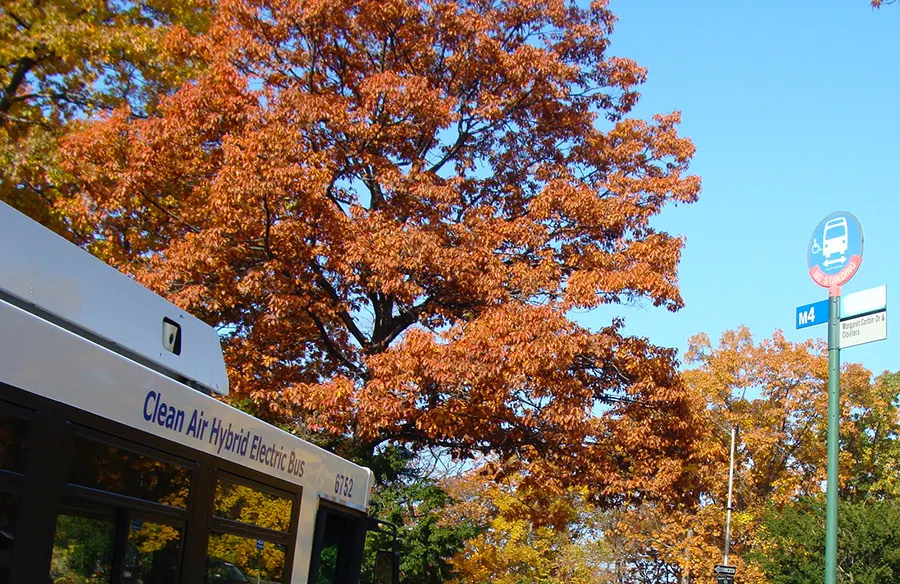
Buses only stop at official stops. That said, between 10 pm and 5 am there's the «Request-A-Stop» service, designed with rider safety in mind.
That means if you go up to the driver and tell them in good time where you want to get off, they'll drop you there even if it isn't an official stop, as long as it's along the route.
Frequency and schedules for New York buses
Bus frequency is decent, though obviously it depends on traffic. Like the subway, service thins out after midnight, on weekends, and on holidays.
To check the scheduled times for each bus line, take a look at the official MTA page (you can also check at the bigger stops, which post schedules and routes on signs). Once again, this is why having a data plan on your phone matters (e-SIMs are very cheap and easy to use).
Local buses vs. express buses
Express buses usually run only on weekdays and during rush hour. They connect one borough with another without intermediate stops, which makes the ride much faster.
They're expensive ($7) per trip. If you have a pay-per-ride MetroCard, that amount will be deducted, but not with the unlimited-ride MetroCard, which only works on local buses.
You can also pay for express buses with OMNY. There too you'll be charged the full express fare.
You can pay with coins as well. My advice: don't overthink it, take the subway!
Planning your trips
If you have internet access (e-SIMs are great and cheap) and want to check routes, connections, and estimated travel times, use Google Maps (more details at that link).
There you can decide whether you want to travel by bus only, by subway, or a combination of both.
Requesting your stop on New York buses
As you approach your stop, press one of the stop buttons placed throughout the bus.
Other buses have a cord by the windows that you pull, and some have a yellow strip running along the windows that you just touch.
You'll know you've requested your stop correctly because the screen will light up with the message «stop requested».
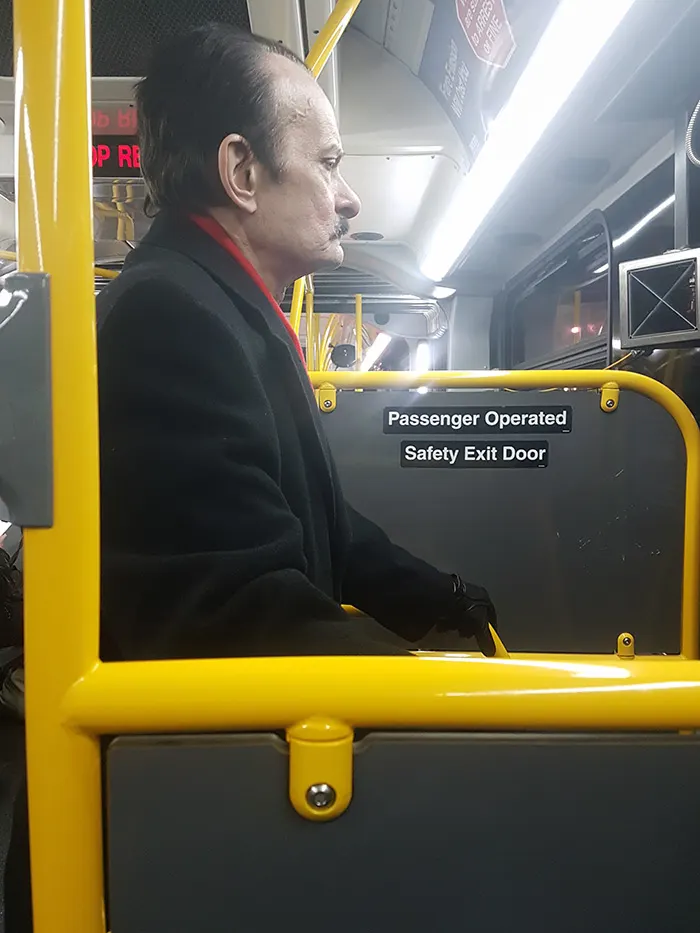
You should only exit through the rear door, and it's important to know that most of the time the doors do NOT open automatically, you have to push them. If you don't, the bus will keep going with you on board XD
Riders with limited mobility
If you have limited mobility, buses are your best bet, since they're modern and fully equipped for it, unlike the subway, an old system without escalators or elevators at most stations.