
South Street Seaport Museum
South Street Seaport Museum
Guía rápida
The South Street Seaport Museum celebrates New York's seafaring origins. It's a reminder that the city grew and organized itself around its port on South Street.
What's left of the old port: cobblestone streets, a block of historic warehouses (Schermerhorn Row), the piers, and the maritime museum's ships docked in front of modern skyscrapers.
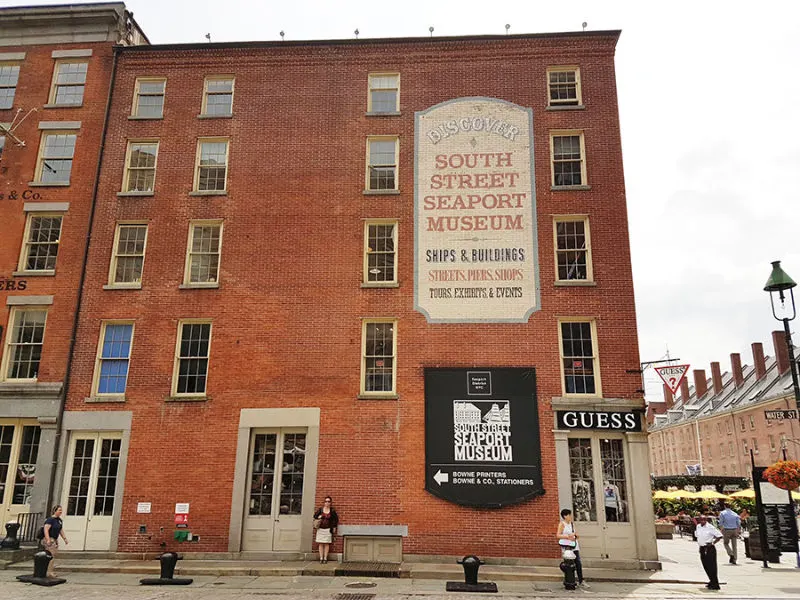
What to See at the South Street Seaport Museum
If you dream of being a sailor, you love ships, or you're traveling with kids, this is a museum I recommend without hesitation.
The South Street Seaport Museum is interactive. Here you can:
- Visit the exhibitions at the main building (12 Fulton Street),
- Climb aboard historic vessels at Pier 16
- Sail on a 19th-century schooner or a tugboat during the summer.
Keep reading for all the details:
1. Exhibitions
The main building of the South Street Seaport Museum sits in one of the historic warehouses of Schermerhorn Row, structures dating back to 1813.
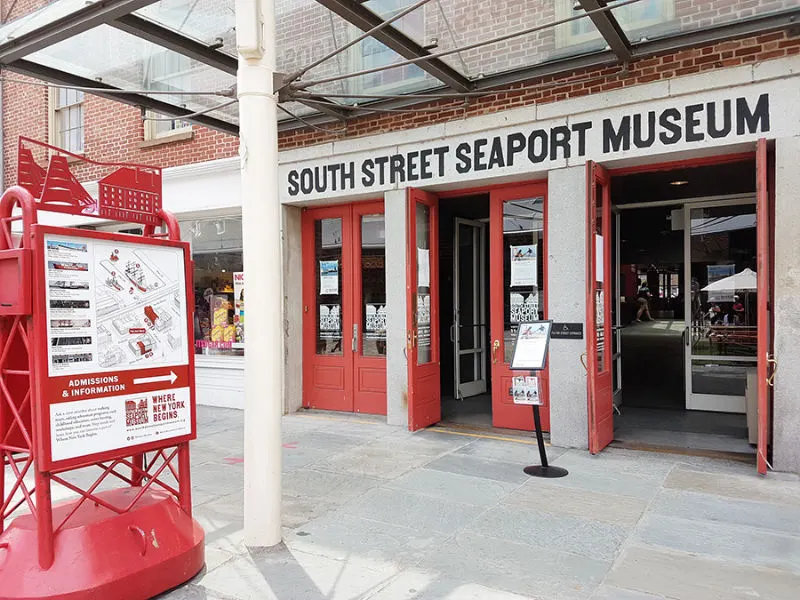
Inside, you'll dig into New York's maritime heritage through stories tied to other famous ports like Liverpool and Punta Arenas in southern Chile.
Street of Ships: the port and its people
The museum's permanent exhibition, Street of Ships, is on the first floor. It lays out the port's history through a collection of 19th-century objects and archives.
Well into the 20th century, South Street was known as the street of ships, thanks to the sheer number of vessels from all over the world tied up at its piers. Today the Seaport Museum's ships remain afloat as witnesses to that era, and you can climb aboard them 🙂 (more details below)
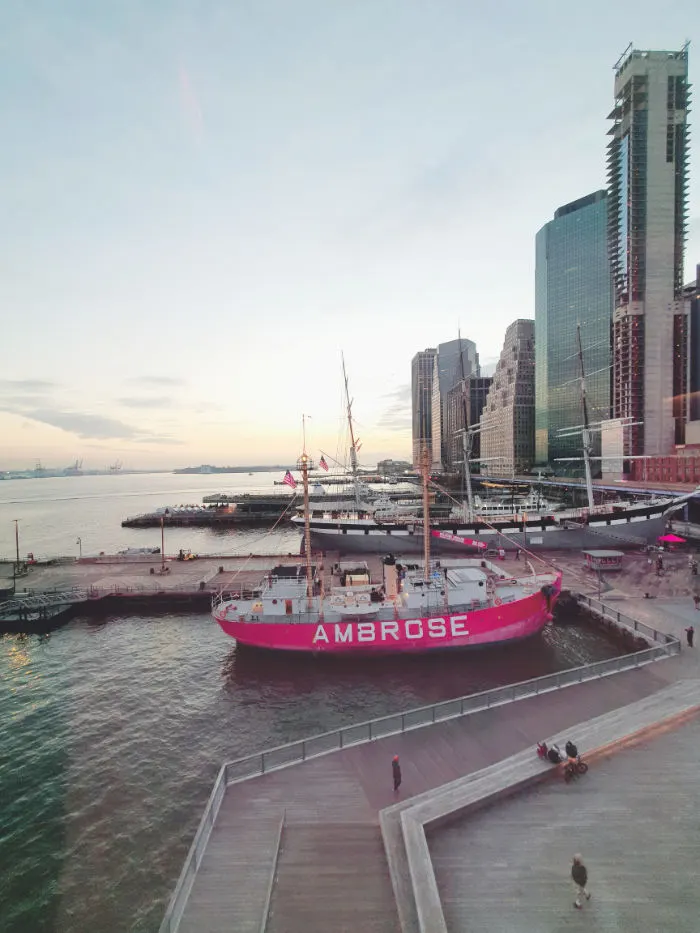
This «forest of masts,» as the port was often described, stretched from present-day Battery Park to the Brooklyn Bridge.
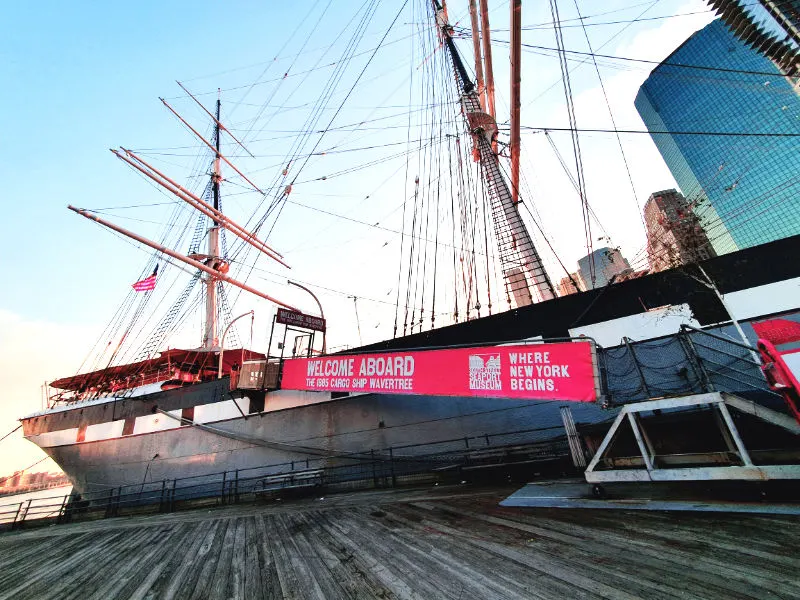
This exhibition also fills in the story of the cargo ship Wavertree, the museum's icon, which you can board (details below).
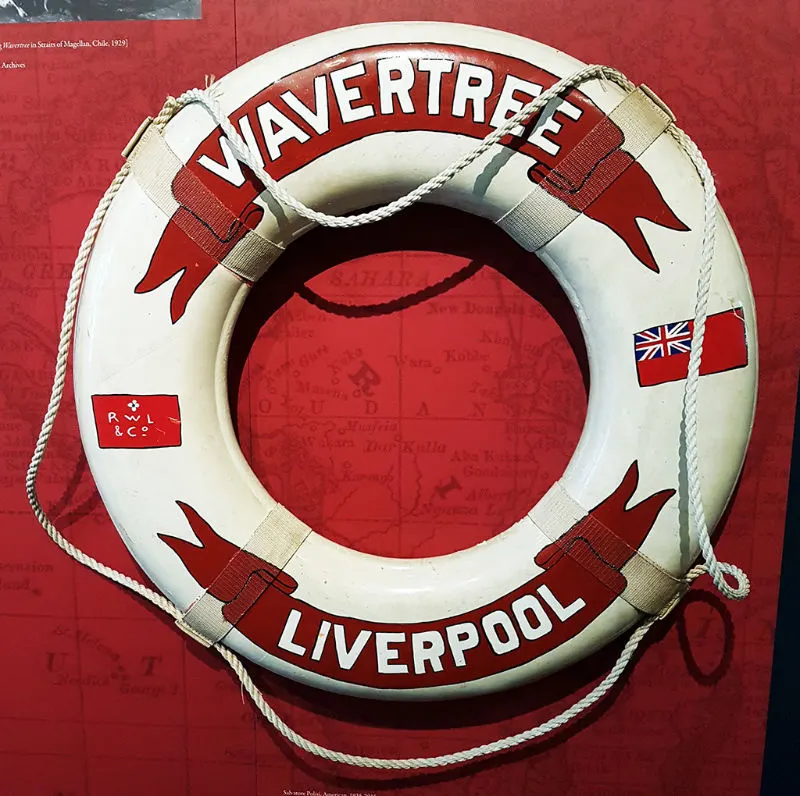
This big merchant sailing ship traveled between Liverpool, New York, and Punta Arenas from 1885 until 1910, the year it ran aground in the Falkland Islands.
Millions: Migrants and millionaires of the ocean liners
Millions is the other permanent exhibition in the museum's main building. It documents what life was like for the millions of migrants and the millionaires who crossed on the great transatlantic liners between 1900 and 1914.
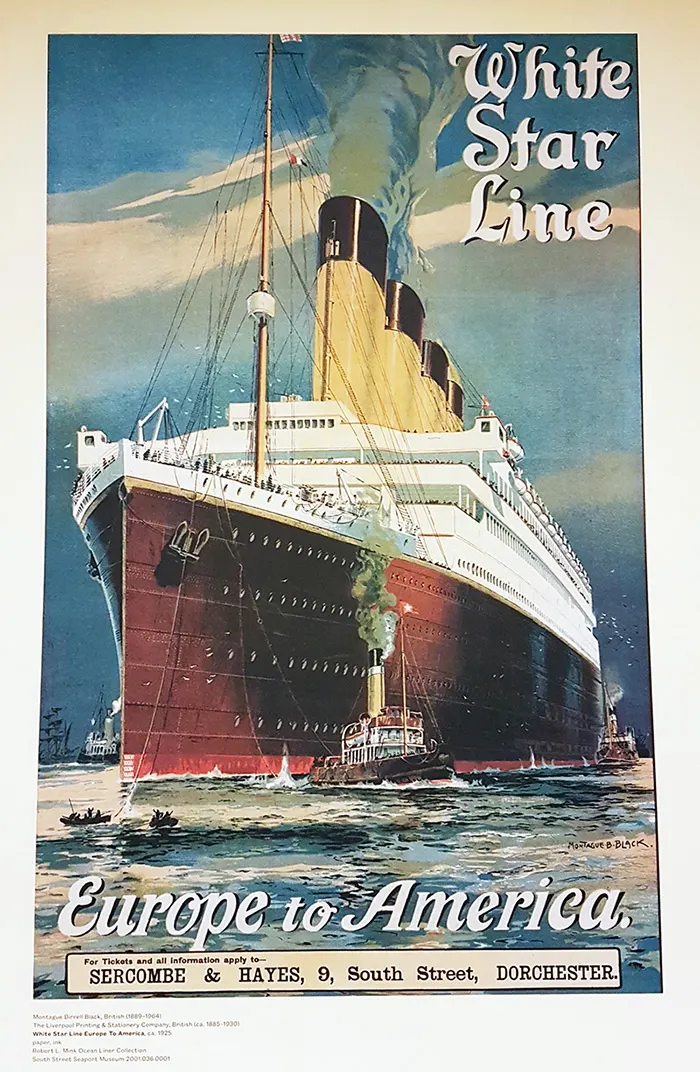
You'll see the brutal gap between first-class passengers and the migrants packed into third class in search of a better life.
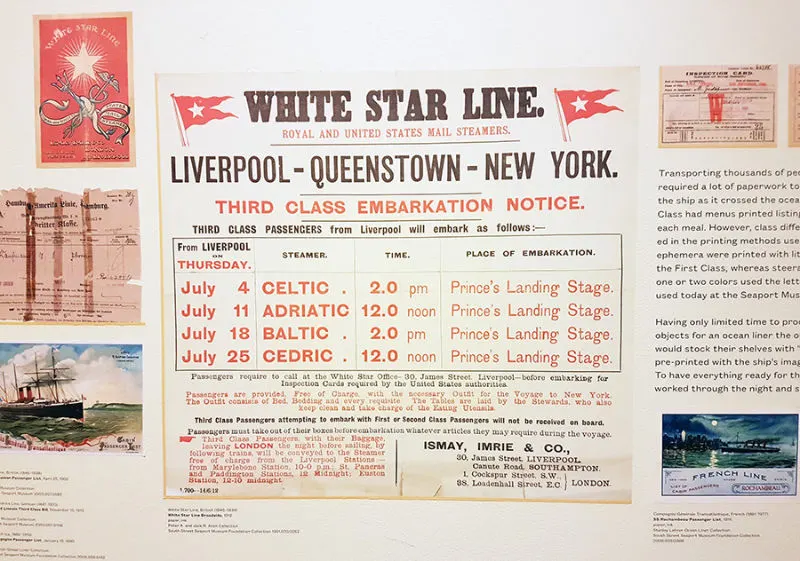
Back then, being considered part of New York high society required strong ties to the old continent. Hence the wealthy families' annual pilgrimage to Europe.
Examples of this aspiration to all things European: banker J.P. Morgan, whose library you can visit, and the Rockefeller family, with their Kykuit Mansion just outside New York, where even the fountains were shipped over from Italy.
Once airplanes arrived, ocean liners stopped being the preferred transport of the city's «nobility.»
Here's a startling figure: between 1900 and 1914, 13 million immigrants arrived in New York aboard those liners. If you want to hear their stories, visit the Immigration Museum on Ellis Island.
Titanic Memorial Lighthouse
The Titanic was one of these liners, sadly famous for sinking in 1912. To honor it, the South Street Seaport Museum acquired the Titanic Memorial Lighthouse, built in 1913 in memory of the victims of the tragedy.
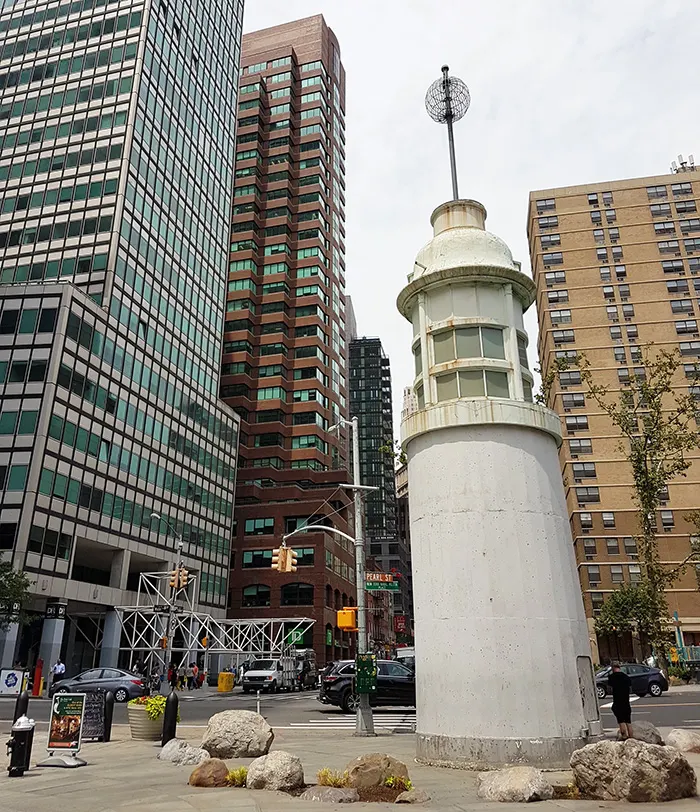
It stands at the start of the Fulton Street pedestrian promenade (corner of Fulton Street and Pearl Street).
2. Climb aboard the ships at Pier 16
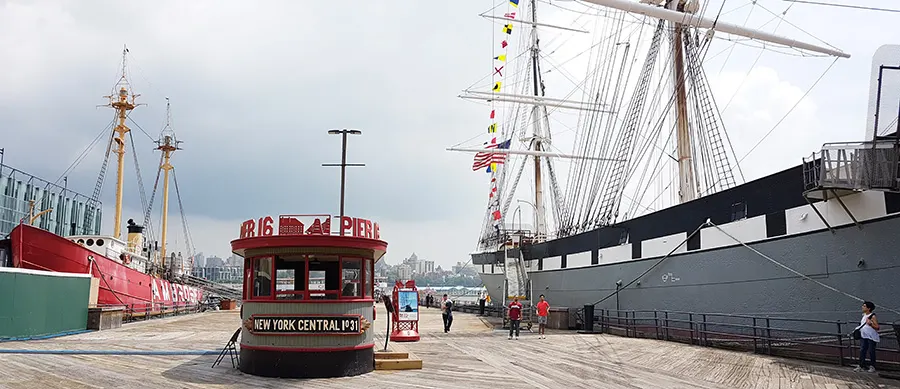
The best of the South Street Seaport Museum is at Pier 16: its fleet of 5 historic ships, which you can admire for free as you stroll the pier.
General museum admission lets you go up on the decks of the cargo ship Wavertree (1885) and the lightship Ambrose (1908).
Wavertree (1885)
The Wavertree is the museum's icon, that distinctive steel merchant sailing ship that, after 25 years traveling between Europe, New York, and Chile, would run aground in the Falkland Islands.
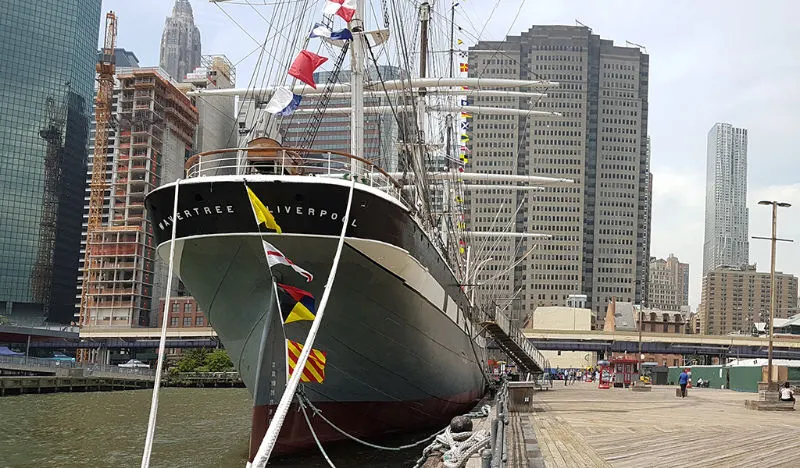
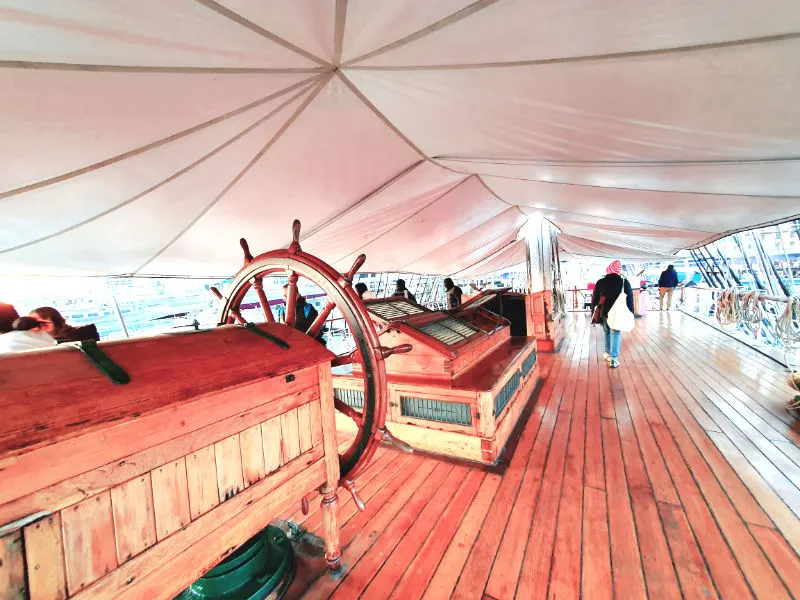
Walking through it, you'll learn more about how people lived and worked on the high seas in the 19th century.
Ambrose (1908)
The Ambrose was the first lightship in New York Harbor. Its job was to guide larger vessels through the Ambrose Channel so they could dock safely at the ports of New York or New Jersey.
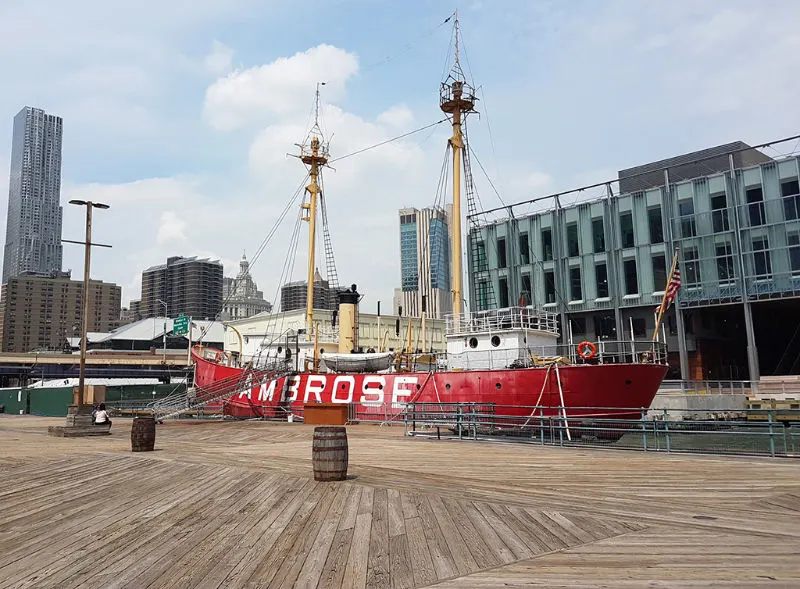
It's a national historic landmark, and general museum admission also gets you aboard to explore the deck and interior spaces.
3. Sail New York Harbor
From May through October you can sail New York Harbor aboard 2 historic vessels: the schooner Pioneer and the tugboat W.O. Decker.
The historic sailing ship Pioneer
Small sailing vessels like the Pioneer (schooner is the correct term) were the «trucks» of their day, hauling goods long before paved roads existed.
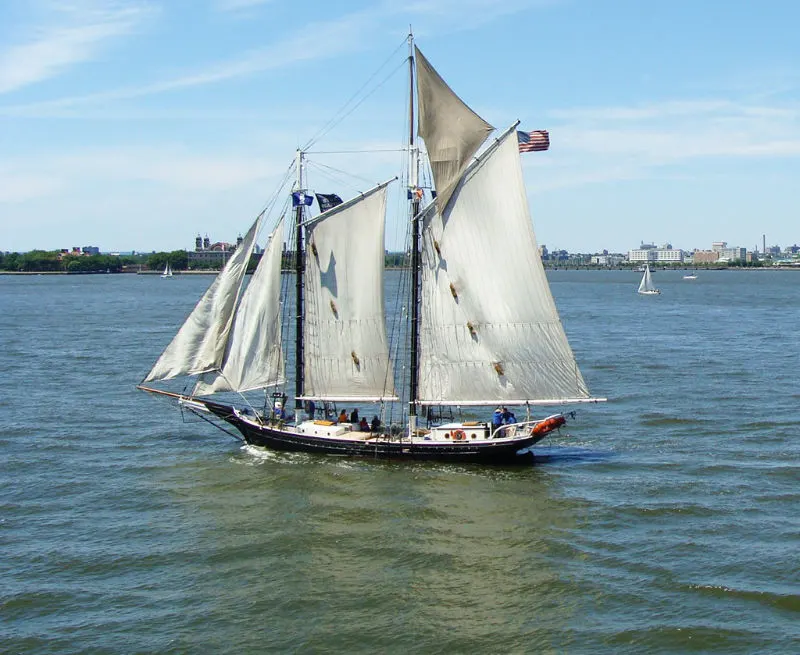
The South Street Seaport Museum refitted her as a school ship and to offer harbor tours for adults and kids, trips that carry you back to the age of sail.
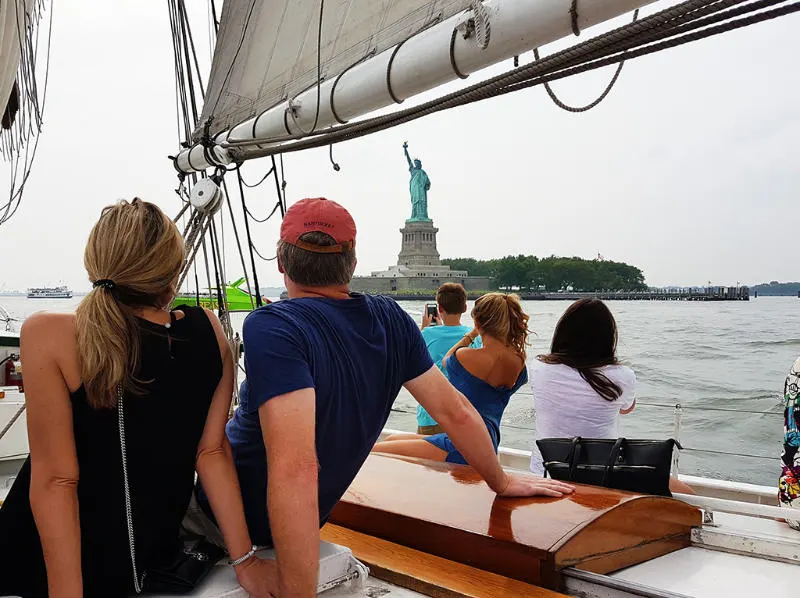
On this 2-hour sail you'll take in the views of Lower Manhattan, pass close to Governors Island, and come within yards of the Statue of Liberty.
And since everything at this museum is hands-on, they'll invite you to hoist the sails and help crew the boat, so you'll feel like a sailor for a while.

All of it with no engine noise, just the gulls, the captain's orders, and the hum of Manhattan in the distance.
Book ahead for this one, because spots are limited. For me it's been one of the best experiences of my life in New York. Highly recommended!
The tugboat W.O. Decker
The 1930 tugboat W.O. Decker is the South Street Seaport Museum's other historic vessel, and you can sail on her from March through October.
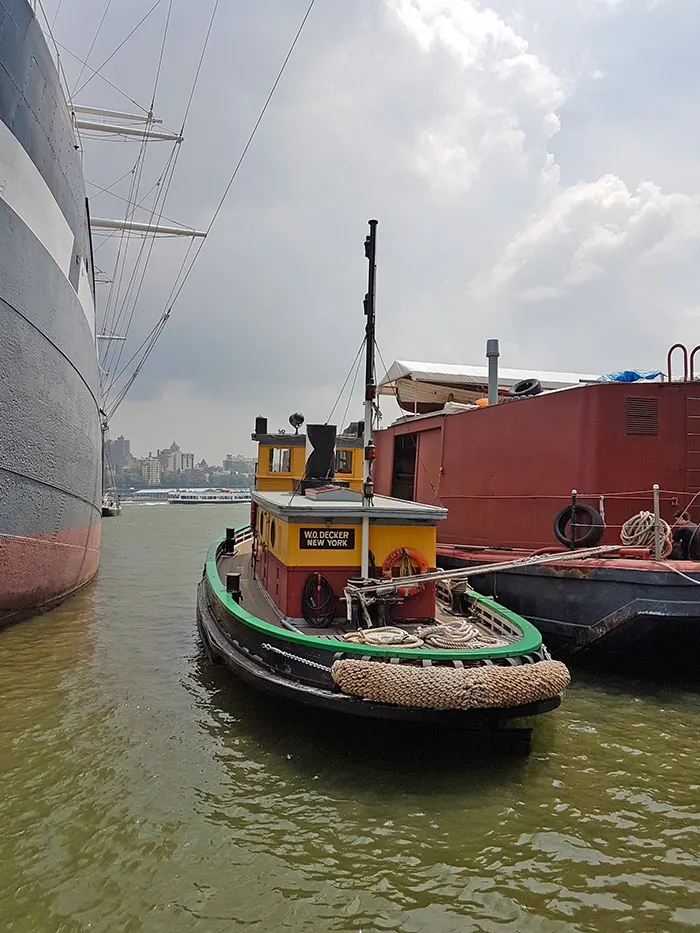
For 1 hour you'll cruise New York Harbor aboard the last wooden tugboat in the harbor still afloat.
You'll also get very close to the Statue of Liberty, which gives you the chance to see her from a completely different angle.
This tour isn't included in general museum admission either. You need to book it in advance.
The South Street Seaport Museum shop
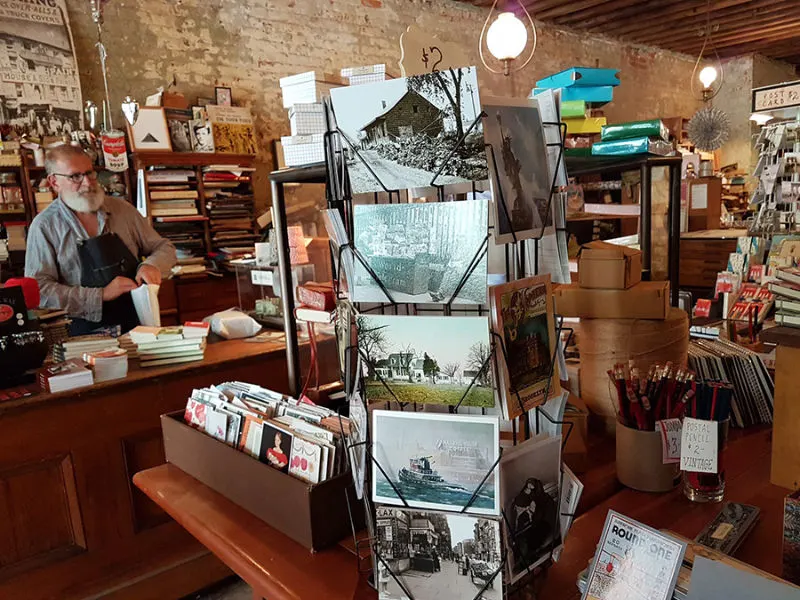
Bowne & Co Stationers (211 Water Street) is a wonderful spot. It's both a shop and another gallery of the South Street Museum, where you'll keep learning about the port's history.
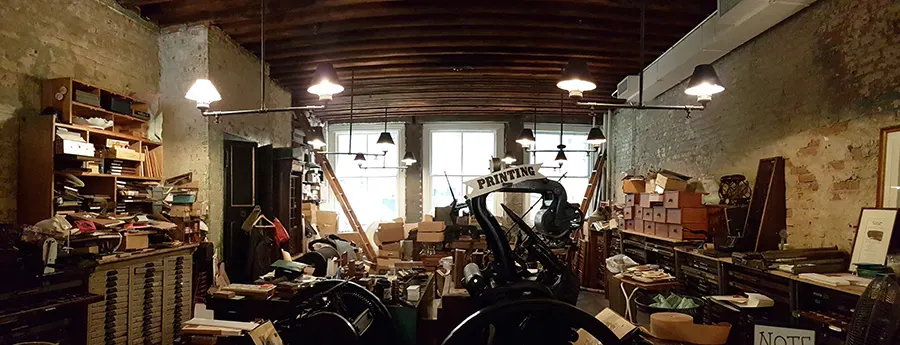
It occupies two storefronts you can walk into freely. In one of them you'll see a 19th-century printing press still turning out the gorgeous stationery sold next door.
Stationery, posters, postcards, notebooks… All proceeds go to the museum's education programs. A very special place to buy New York souvenirs with real meaning (much like the shop at the New York Transit Museum).
Address
Main building: 12 Fulton Street (Schermerhorn Row)
Ships: Pier 16
Getting there
Nearest subway:
Lines A, C, 2, 3, J, Z, 4, 5. Fulton Street
Hours
Wednesday to Sunday, 11 am to 5 pm
Prices
General admission includes access to the main building, the cargo ship Wavertree and the lightship Ambrose.
Sailing on the schooner Pioneer and the tugboat W.O. Decker are ticketed separately.
Check current prices on the museum's official site.
Map
[mappress mapid=»241″]